上班比失業更痛苦?
For Gen Z-ers, Work Is Now More Depressing Than Unemployment
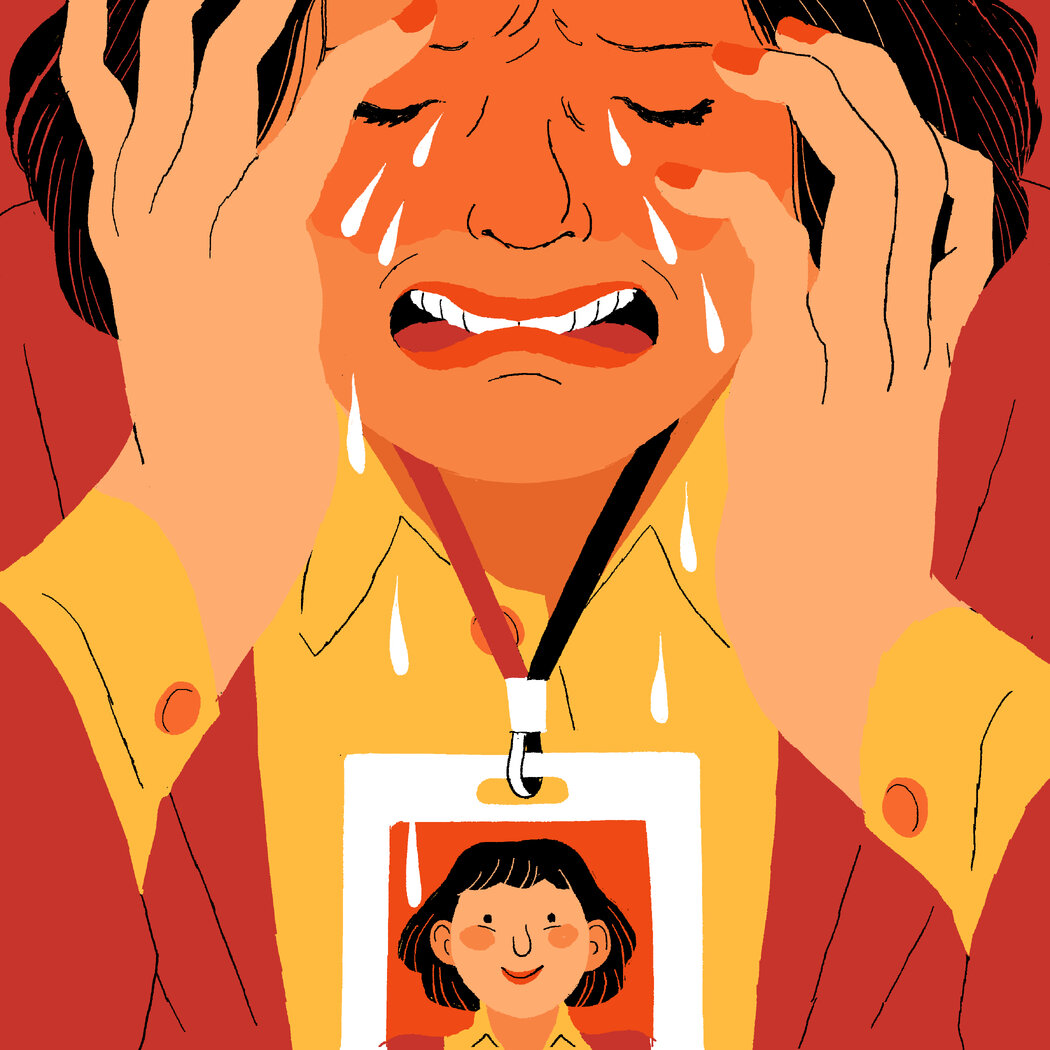
The older generation always discounts the workplace complaints of the younger generation. In my 20s, there seemed to be an endless supply of commentary about how we millennials were lazy and entitled, just like the members of Generation X before us were slackers. Members of Gen Z get the bad rap of being “unemployable,” because apparently they do not prize achievement for its own sake, or they’d rather be influencers because the internet has broken their brains.
老一輩人總愛對年輕一代的職場抱怨不以為然。在我二十多歲的時候,輿論似乎沒完沒了地評論我們千禧一代如何懶惰、自以為是,就像當年說X世代是懶蟲一樣。如今Z世代又被貼上「沒法勝任工作」的標籤,只因他們不求上進,或是想當網紅——彷彿互聯網摧毀了他們的理智。
Gen Z-ers don’t even deserve this perfunctory slander, because the entire process of getting and keeping an entry-level job has become a grueling and dehumanizing ordeal over the past decade.
Z世代其實不該背負這種草率的詆毀,因為過去十年間,找到並保住一份入門級工作的整個過程,已經變成了一場令人筋疲力盡、失去人性的折磨。
Certainly the job market seems grim in this moment. Michael Madowitz, the principal economist at the Roosevelt Institute, described it as “an awful traffic jam.” “If you’re just out of college, you’re trying to merge into a freeway and nobody is letting you in,” he explained. Employers at companies like Airbnb and Intuit almost sound excited talking to The Wall Street Journal about staying lean and culling the number of employees they have, as long as it creates short-term profits.
眼下的就業市場確實顯得嚴峻。羅斯福研究所的首席經濟學家麥可·馬多維茨形容它像「一場可怕的大塞車」。他說:「如果你剛從大學畢業,就像在試圖併入一條高速公路,而沒人願意讓你進來。」像愛彼迎和Intuit這些公司的管理層在接受《華爾街日報》採訪時,對於如何保持精簡、削減員工人數來換取短期利潤幾乎是津津樂道的態度。
But the whole experience of work for young people has been tortured for far longer than the economy has been stalled. Earlier this year, my colleague David Brooks spoke to a college senior who called young Americans “the most rejected generation,” describing the hypercompetition that has bled into all aspects of life, even for the most privileged college-educated strivers.
早在眼下的經濟停滯期開始之前,職場的體驗對年輕人來說就已經是煎熬了。今年早些時候,我的同事戴維·布魯克斯與一名大四學生對話,後者稱美國年輕人是「被拒絕最多的一代」,激烈的競爭已滲透生活的各個角落,即便是享有特權的名校精英亦難倖免。
廣告
Because most job applications are submitted online, the bar to applying is so much lower than it was in the analog world decades ago, and so for any open role, applicants are competing with hundreds of people. The sense of scarcity and lack starts earlier, because so many selective colleges boast about their record-low admissions rates.
因為如今大多數求職申請都是在線提交的,比幾十年前紙質申請的門檻低得多,所以每一個空缺職位都意味著要與上百個競爭者較量。資源稀缺和匱乏的感覺,則開始的更早,畢竟眾多精英大學還在得意地宣稱錄取率達到了史上最低。
But now artificial intelligence is performing the first few rounds of culling, including early screening, which is further dehumanizing and gamifying the application process. Richard Yoon, who is an economics major at Columbia, told me that when his peers have multiple interviews for jobs in finance, he asks if they heard back from any of them. They tell him: “You don’t understand. Like 19 of those 20 interviews were with bots.”
如今人工智慧更承擔了初步的篩選工作,包括首輪簡歷篩選,這使求職過程進一步非人化,淪為遊戲規則。哥倫比亞大學經濟學專業學生理查德·尹告訴我,當他的同學在金融業經過多輪面試後,他問及後續進展時總是得到這樣的回答:「你不明白。20場面試裡至少有19場是和機器人在聊。」
It’s customary for job seekers to review their résumés for keywords they think A.I. likes, Yoon told me, so that they might have a chance of getting through the digitized gantlet and one day making human contact that could possibly lead to a job offer. Or at the very least a real-life networking connection. Yoon called the process “dystopian.”
尹告訴我,求職者如今都習慣在簡歷裡堆砌自以為人工智慧偏好的關鍵詞,只有這樣,他們才有可能闖過數位化篩選的關卡,獲得與真人接觸的機會,進而爭取工作邀約。或者至少建立起真實的職場人脈。他稱這是個「反烏托邦」的過程。
But once you actually have a job, the real dystopia begins. Young people feel as if jobs offer far less mentorship and more micromanaging. Stevie Stevens, who is 27 and lives in Columbus, Ohio, told me that she left a full-time job in July at an exhibition design and production firm because she felt hyperscrutinized and undersupported. “Managers expect you to do six jobs in a 40-hour workweek. My company had mediocre benefits and offered little to no professional growth or training,” she told me.
但踏入職場後,真正的反烏托邦才開始。年輕人感到工作中的指導扶持變少了,而微管理卻無處不在。27歲的斯蒂薇·史蒂芬斯現居俄亥俄州哥倫布市,她告訴我,她在7月辭去了在一家展覽設計與製作公司的全職工作,因為她覺得自己被過度審視卻缺乏支持。她說,「經理們希望你在每週40小時的工作時間內完成六個人的工作。公司福利平平,難以獲得職業成長或培訓機會。」
Stevens also said that what she calls “surveillance state technologies” — apps that synthesized her personal data to determine her level of effort — are part of that feeling of micromanagement. Though she doesn’t have benefits through work now and deals with more uncertainty as a freelancer, she is happier because she has autonomy and control over her time and her efforts.
史蒂芬斯還提到她所謂的「監控國家的技術」——那些通過整合個人數據來評估工作投入度的應用程序——正是她感到被過度管理的來源之一。儘管如今自由職業缺乏福利保障且收入不穩,她卻因能自主掌控時間與工作節奏而備感輕鬆。
For the past several years, employers have used “bossware” to track worker productivity. A Times investigation in 2022 found that across professional fields and pay grades, employers were tracking keyboard use, movements and phone calls, and docking employees for time that they perceived to be “idle.”
廣告
That kind of tracking doesn’t account for things like conversations with peers, thinking — you know, with your brain — or, if you work in a warehouse, taking a rest so your body doesn’t fall apart. At least older workers knew a time before this tracking was ubiquitous, and at this point might be senior enough to have the leverage to push back against the most extreme types of surveillance.
這種監控方式並沒有考慮到一些事情,比如同事間的交流、思考——你懂的,用大腦思考——更遑論給倉儲工人留出避免身體透支的必要休憩。至少年長的員工還記得在這種監控無處不在之前的時代,如今他們的職位也足夠高,有資本去抵制極端的監視行為。
It’s no wonder, then, that a working paper published by the National Bureau of Economic Research in July found that young worker despair has been rising in the United States for about a decade. Its co-authors, David Blanchflower and Alex Bryson, analyzed data from the Behavioral Risk Factor Surveillance System, a yearly federal health survey of 400,000 Americans, focusing on how many bad mental health days — ones described as containing “stress, depression and problems with emotions” — a worker had in the past month. They then created a mental despair measurement using the number of bad mental health days, comparing mental despair across demographic, employment and educational characteristics.
Blanchflower and Bryson found that for workers under 25, mental health is now so poor that they are generally as unhappy as their unemployed counterparts, which is new in the past several years. The rise in despair is particularly pronounced among women and the less educated. Last year, job satisfaction for people under 25 was about 15 points lower than it was for people over 55. This was true in the same year that satisfaction rose for every other age group, according to a survey from the Conference Board. The unhappiness of young workers seemed so pronounced in the past year — whether because of the rapid rise of A.I., the uncertainty of the market, or some other rancid combination of post-Covid malaise and general disaffection.
布蘭奇弗勞爾與布萊森發現,25歲以下職場群體的心理健康狀況已嚴重惡化,其痛苦程度普遍與失業者相當——這一現象在過去幾年才出現。絕望情緒的上升在女性和受教育程度較低的人群中尤為顯著。去年,25歲以下人群的工作滿意度比55歲以上人群低了大約15個百分點。美國世界大型企業聯合會的調查顯示,在同年,其他所有年齡組的滿意度都在上升。年輕勞動者的不滿在過去一年裡尤為明顯——無論是因為人工智慧的迅速崛起、市場的不確定性,還是新冠疫情後的倦怠與普遍不滿交織形成的某種惡劣組合。
I called Bryson to find out more about why young workers are so unhappy. He has two hypotheses. One is that the perception of work satisfaction has changed: Young people expect to be happier than previous generations were, in part because they’re using social media to compare themselves to some of their peers, only to then find themselves disappointed by the tedium of their own 9-to-5s. But the other hypothesis is in line with what I’m hearing from young people: The workplace is markedly worse.
我打電話給布賴森,想進一步了解為什麼年輕勞動者如此不快樂。他提出了兩個假說。其一是,工作滿意度的認知發生了變化:年輕人抬高了幸福預期,部分原因是他們在社群媒體上不斷與同齡人比較,結果卻發現自己的朝九晚五單調乏味,從而備感失落。另一個假說則與我從年輕人那裡聽到的情況一致:職場環境的確變得更糟了。
Employers might not extend the workday, Bryson speculated, but the amount of work expected in each hour is “intensifying” because every move is captured and cataloged by employers. This makes employees feel as though they have no job control, which “is a fundamental tenet in terms of job quality, the idea that you feel that you have some degree of autonomy over what you’re doing rather than just being directed as an automaton,” Bryson said.
布賴森推測,雖然僱主可能並沒有延長工作日的時間,但每小時被期待完成的工作量正在「加劇」,因為員工的每一個動作都被僱主記錄和歸檔。這讓員工覺得喪失了對工作的掌控力,而這種掌控感「是衡量工作質量的核心要素之一,也就是你覺得自己對所做的事情擁有一定的自主性,而不是像機器一樣被人操控」,布賴森說道。
Gen Z-ers seem to be having a few disparate reactions to this state of play. Both Stevens and Yoon told me that they see entrepreneurship as potentially safer than corporate work at this point. Yoon told me he saw a family member spend decades at a Fortune 500 company only to get unceremoniously laid off, and it has made him consider a less traditional path. The other is unionization. Bryson wondered if the renewed support for unionization among young people in the United States is an antidote to this misery.
Z世代似乎對這種局面出現了幾種不同的反應。斯蒂文斯和尹都告訴我,他們認為創業現在可能比在公司打工更安全。尹說,他看到一位家人在一家財富500強企業工作了幾十年,卻遭粗暴裁員,這促使他重新審視傳統職業路徑。另一種反應則是加入工會。布賴森推測,美國年輕人中對工會支持度的回升,也許正是對抗這種痛苦的一種解藥。
廣告
Whatever is going to happen for Gen Z-ers as we all live through the A.I. revolution, I hope that their elders approach them with more compassion than disdain. At least I got rejected to my face when I was in my 20s, which now seems like a luxury I didn’t appreciate.
無論在人工智慧革命中Z世代的命運將如何,我都希望長輩能對他們施以更多的同情而非不屑。至少我在二十多歲時遭遇的拒絕都是當面進行的——這如今看來竟成了我不曾珍惜的奢侈。


