尋味台灣:在美食中探索身份與民族認同
What Cuisine Means to Taiwan’s Identity and Its Clash With China

Taiwan is a self-ruling island of 24 million people that is officially known as the Republic of China. Only about a dozen countries recognize it as a nation because China claims it as one of its provinces. Taiwan is called “Chinese Taipei” by international organizations and at the Olympic Games.
台灣是一個擁有2400萬人口的自治島嶼,官方名稱為中華民國。只有大約十幾個國家承認它是一個國家,因為中國聲稱它是自己的一個省份。國際組織和奧運會都將台灣稱為「中華台北」。
The ambiguity of Taiwan’s nationhood contrasts with a growing Taiwanese claim of identity. More than 60 percent of the people living on the island identify as Taiwanese, and roughly 30 percent identify as both Chinese and Taiwanese, according to the latest results of an annual survey conducted by National Chengchi University in Taipei. Only 2.5 percent consider themselves Chinese exclusively.
台灣國家地位的模糊性與台灣人日益強烈的身份認同形成鮮明對比。位於台北的國立政治大學一項年度調查的最新結果顯示,超過60%的台灣人認為自己是台灣人,大約30%的人認為自己既是中國人也是台灣人。只有2.5%的人認為自己完全是中國人。
But what makes them Taiwanese, not Chinese? How will they create a cohesive narrative about their identity? And how do they reconcile with their Chinese heritage?
但是,是什麼讓他們成為台灣人,而不是中國人?他們將如何為自己的身份創造一個連貫的敘事?他們如何與他們的中華遺存和諧相處?
For many people, it’s through food, one of the things the island is known for, aside from its semiconductor industry. In the past decade or so, restaurateurs, writers and scholars have started to promote the concept of Taiwanese cuisine, reviving traditional fine dining and incorporating local, especially Indigenous, produce and ingredients into cooking.
對很多人來說,除了半導體產業,美食是這個島嶼最出名的東西之一。在過去十年左右的時間裡,餐館老闆、作家和學者開始推廣台灣美食的概念,復興傳統美食,並將當地、尤其是原住民的農產品和食材融入烹飪中。
They are articulating and shaping a culinary culture that’s distinct from that of China, highlighting a Taiwanese identity that’s organic, tangible and immersed in everyday life. The food embodies Taiwan’s yearning for recognition as a nation, or at least as a culture of its own.
他們正在闡述和塑造一種與中國不同的烹飪文化,彰顯一種有機、有形、融入日常生活的台灣人身份。這種美食體現了台灣渴望被承認是一個國家,或者至少是一個屬於自己的文化。

“For years, Taiwan’s ‘nationhood’ has been an ambiguous concept,” Yu-Jen Chen, a food historian at National Taiwan Normal University in Taipei, wrote in a 2020 book. “And that makes the question ‘What Taiwanese cuisine is’ particularly interesting.” She said the efforts to define and shape the cuisine allowed the Taiwanese to “taste and feel the ‘nationhood.’”
「多年來台灣的『國族性』其實一直十分曖昧,」位於台北的國立台灣師範大學的飲食歷史學家陳玉箴在2020年出版的一本書中寫道。「這也使得『什麼是台灣菜』成為一個特別有趣的問題,」她說,定義和塑造美食的努力讓台灣人「品嘗『國族』,感受『國族』」。
Ian Lee is the owner and executive chef of the HoSu Restaurant in Taipei. HoSu means “good island” in the Taiwanese dialect, and he uses his menu to express his love of the land of Taiwan — its produce, terrain and aroma.
李易晏是台北好嶼HoSu餐廳的老闆兼行政總廚。HoSu在台灣方言中的意思是「好島」,他用自己的菜單來表達對台灣土地的熱愛——它的物產、地貌與氣息。
廣告
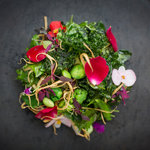
One of Mr. Lee’s dishes, a smoky chargrilled fish, draws inspiration from the cooking of the Atayal, one of many Indigenous groups in Taiwan. The rice noodle soup Dingbiancuo, a famous street snack, is elevated to a main course. Taiwanese mango is presented in the shape of the terraced fields where the decorative herb for the dessert is grown.
李易晏的一道名菜是煙熏炭烤魚,它的靈感來自台灣眾多原住民民族之一泰雅族的烹飪。著名的街頭小吃鼎邊趖米粉湯則被提升為主菜。台灣芒果擺放成梯田的形狀,甜點旁邊裝飾的香草也是梯田種的作物。
“I want the others to see how wonderful and vibrant Taiwan is by telling the stories of our homeland,” he said.
「我想通過講土地的故事讓大家看到台灣的好,讓大家看到台灣有什麼樣的生命力,」他說。
Mr. Lee believes his food could enhance the chances that the people of Taiwan will stand up to China, whose threat to take over the island by force is looking more real than it has in many decades.
李易晏認為,他的食物可以增加台灣人民反抗中國大陸的機會。中國大陸以武力接管台灣的威脅,如今看起來比幾十年來任何時候都更加真實了。


“We have to help people identify with this land so a national identity could emerge eventually,” he said. “So if something happens, we will be willing to fight for our homeland.”
「我們必須要讓大家有對這個土地的認同,才有辦法形成國家的認同,」他說。「如果真的發生什麼事情的時候,大家會願意為了這塊土地去抗爭。」
Nowhere does food exist independently from politics. After Mexico’s independence from Spain two centuries ago, the Mexican cuisine helped shape a national identity. In March, China’s top leader, Xi Jinping, said, “Whether the public can have vegetables on their tables is a political matter.”
任何地方的食物都離不開政治。兩個世紀前墨西哥脫離西班牙獨立後,墨西哥菜幫助塑造了一種民族認同。今年3月,中國最高領導人習近平說:「能不能吃上菜就是政治。」
In Taiwan, the idea of Taiwanese cuisine first appeared as a way to differentiate it from the cuisine of the island’s colonial Japanese rulers in the early 20th century. During the authoritarian rule of the Nationalist Party, or Kuomintang, Taiwanese food was considered a regional cuisine like that of Shanghai and Sichuan, but it held a lower status.
在台灣,台灣菜的概念最初是在20世紀初出現的,目的是將台灣菜與日本殖民統治時期的菜區分開來。在國民黨的威權統治時期,台灣菜被認為是一種地方菜,同上海菜和川菜一樣,但地位較低。
廣告
After the lifting of martial law in 1987, especially after Chen Shui-bian, a Taiwanese-born nationalist, was elected president in 2000, Taiwanese snacks were served at state banquets. Cuisines of Indigenous groups and Hakka people, a Han Chinese subgroup, began to rise, reflecting the inclusiveness of a new democracy.
1987年解除戒嚴令後,特別是2000年台灣民族主義者陳水扁當選總統後,國宴上出現了台灣小吃。原住民和漢族客家人的美食開始興起,反映了新興民主的包容性。
Today, ask a dozen Taiwanese what Taiwanese cuisine means to them and you might get a dozen answers.
在今天,要問台灣人台灣菜對他們意味著什麼,問十幾個人可能會得到十幾個答案。

Ching-yi Chen, a food writer in Taipei, asked each attendee of an event to bring a dish that the person considered to be Taiwanese cuisine. A woman in her 20s brought mapo tofu, originally from China’s Sichuan Province, because she grew up eating it. An older pro-independence politician brought a bowl of eel noodle. That is a dish from Tainan, the stronghold of the ruling Democratic Progressive Party, which promotes Taiwanese nationalism.
台北的美食作家陳靜宜要求每位參加活動的人帶一道自己認為是台灣菜的菜肴。一名20多歲的女士帶來了源自中國四川省的麻婆豆腐,因為她從小到大都吃這道菜。一位年長的獨派政客端來了一碗鱔魚面。這是一道台南菜,那裡是宣揚台灣民族主義的執政黨民進黨的大本營。
To Ms. Chen, both qualified as Taiwanese cuisines. “Anything on this land that is transformed and given a new form or life can be referred to as ‘Taiwanese cuisine,’” she said.
對陳靜宜來說,這兩者都可以被稱為台灣菜。「我認為在這塊土地上能夠經過轉化而重新被賦予新的狀態或生命的都能夠稱之為台菜,」她說。
She pointed to the prevalence of miso soup in Taiwanese meals, a vestige of the Japanese colonial rule. In Taiwan, the soup can go with cold noodles, glutinous rice dumplings and even meatballs, she said, something that probably would not happen in Japan.
她指出,台灣餐中常見味噌湯,這是日本殖民統治的痕跡。她說,在台灣,涼麵、粽子甚至肉丸都可以搭配這種湯,在日本可能不會這樣。
“The reinterpretation makes it a new dish and part of Taiwanese cuisine,” she said.
「在重新被詮釋之後的這個新的食物,我也認為是台菜的一部分,」她說。
廣告
For both Taiwanese cuisine and identity, the trickiest aspect is how to reconcile with its Chinese heritage.
對於台灣美食和身份認同來說,最棘手的問題是如何兼顧它的中國傳統。
“For me, the Chinese government and my Chinese ancestors are two separate things,” Ms. Chen said. “As much as we want to stay away from the Chinese government, most people probably won’t go as far as disowning their ancestors.”
「對我自己來說的話,其實中國的政權跟我們的祖先是兩件事情,」陳靜宜說。「我覺得人再怎麼切割,不會去切割到自己不要祖先這件事。」
For the most part, Taiwanese people seem to be at ease with their Chinese heritage. The streets of Taipei can feel like any city in southern China. Most people speak Mandarin Chinese even though the Taiwanese dialect is gaining popularity. Many roads and places are named after Chinese provinces. I stayed at a hotel on Jilin Road and ate pork liver soup at a night market named after my home region, Ningxia.
在大多數情況下,台灣人似乎對自己的中華血統感到滿意。台北的街道感覺和任何一個中國南方城市沒什麼不同。儘管台灣方言越來越流行,但大多數人都說普通話。許多道路和地點都以中國省份命名。我住在吉林路的一家酒店,在一個以我的家鄉寧夏命名的夜市裡喝了豬肝湯。
Many restaurants in Taipei claim to offer Sichuan, Hunan and Shanghai cuisines. But for those mainland Chinese who are looking for “authentic” regional Chinese food, they’re in the wrong place.
台北的許多餐館都聲稱提供川菜、湘菜和上海菜。但對於那些想尋找「地道」中國地方美食的大陸人來說,他們來錯地方了。


The dishes at a Hunan restaurant are not spicy at all. The Shanghai restaurant at the Shangri-La Hotel in Taipei is excellent. But the most memorable dish, for me, was steamed glutinous rice with mud crab, a signature Taiwanese dish.
湖南餐館的菜一點也不辣。台北香格里拉大酒店的上海餐廳非常棒,但對我來說,那裡最令人難忘的一道菜是台灣招牌菜青蟹蒸糯米。
A place where many Indigenous languages are spoken, and the first in Asia to allow same-sex marriage, Taiwan is an inclusive society. So is its cuisine. It’s fusion, or anything goes, said Jewel Tsai, another Taipei food writer.
台灣是一個講多種原住民語言的地方,也是亞洲第一個允許同性婚姻的地方,是一個包容的社會。台灣美食也是如此。是融合,或只要好吃就行,另一位台北美食作家蔡珠兒表示。
廣告
“That’s why it’s difficult to define Taiwanese cuisine,” she said. “How are you going to define something that’s ever expanding like a snowball?”
「台菜很難定義,」她說。「因為你要去怎麼定義一個好像滾雪球一樣越滾越大的東西呢?」
One group in the movement is elevating original Taiwanese cuisine, which was diminished and looked down on during the more than half-century of political repression of Taiwanese civilians under the rule of Kuomintang. Taiwanese elites were killed or jailed. Speaking the Taiwanese dialect in schools was subject to fines. High-end Taiwanese restaurants were converted into public canteens to accommodate the two million mainlanders who evacuated to the island after the Kuomintang lost the civil war to the Communist Party in 1949.
這場運動中的一個群體正在提升原汁原味的台灣美食的地位,在國民黨統治下對台灣民眾進行的半個多世紀的政治鎮壓中,台灣美食被削弱和貶低。台灣精英被殺或監禁。在學校說台灣方言會被罰款。1949年國民黨在內戰中敗給共產黨後,台灣的高檔餐廳被改造成公共食堂,接待撤離到島上的200萬大陸人。
Chefs at Mountain and Sea House, a fine dining restaurant that opened in Taipei in 2014, tracked down old recipes and reincarnated traditional Taiwanese banquet dishes from a century ago. One of its most exquisite items is a vegetable bun made of interweaving bottle gourd and carrot slices and stuffed with black pork and mushrooms.
2014年,高級餐廳山海樓在台北開業,廚師們追溯古老的食譜,將一個世紀前的傳統台灣宴會菜肴重新演繹出來。其中最精美的菜肴之一是用交織的蒲瓜和胡蘿蔔薄條包起來的蔬菜包,餡料是黑豬肉和蘑菇。
The most audacious efforts in Taiwanese cuisine are made by those like Mr. Lee, the owner-chef of HoSu restaurant, who try to elevate the Indigenous cooking and ingredients.
好嶼HoSu餐廳的老闆兼主廚李易晏等人試圖提升本土烹飪和食材的水平,為台灣美食做出了最大膽的努力。
In the political debate, Taiwanese nationalists often emphasize the existence of the Indigenous groups as evidence that Taiwan has its unique origins, of which the Chinese culture is only a part, Yu-Jen Chen, the food historian, wrote in her book. Even though the Indigenous groups make up only 2 percent of Taiwan’s population, she wrote, they’re an important part in the narrative of Taiwanese nationhood.
食品歷史學家陳玉箴在她的書中寫道,在政治辯論中,台灣民族主義者經常強調原住民群體的存在,以此作為台灣擁有其獨特起源的證據,而中華文化只是其中的一部分。她寫道,儘管原住民群體僅佔台灣人口的2%,但他們是台灣國族敘事的重要組成部分。
Mr. Lee believes that the Ukrainians have put up a good fight against Russia because they identify strongly with their nationhood. He wants to use his cooking to advance the sense of Taiwanese identity.
李易晏認為,烏克蘭人在對抗俄羅斯方���表現出色,因為他們對自己的民族認同感強烈。他想用自己的烹飪來提升台灣人的認同感。
廣告
“Everyone is a small screw,” he said. “We need to tighten and fasten these screws properly for the system to function normally. When the system operates smoothly, I believe the other side will be less inclined to engage in aggression or attempts to annex.”
「我覺得大家都是一個小螺絲,」他說。「好好地把這些螺絲拴緊扭緊,這個系統它才會正常運作,那如果它是正常運作的情況底下,我相信人家就比較不敢去做侵略或是并吞這樣的事情。」