🌐 AI搜索 & 代理 主页

Summary

  1. 'This very much feels like the pandemic'published at 14:12 GMT

    Simon Jones
    Reporting from Kent

    At the Darent Valley Hospital in Dartford, Kent, staff say this very much feels like the pandemic.

    People are being asked to wear masks in all clinical settings, there’s a new emphasis on hand hygiene, and the hospital is under huge pressure due to flu cases.

    Doctors are currently caring for 50 patients with the virus, and they saw more people with flu in the first week of December than in the whole of November (a trend we've seen elsewhere).

    There is also the added challenge of some staff being off sick.

    Fortunately though a bit of festive cheer is being brought by the Pets As Therapy dogs - who are visiting to cheer up some of hospital’s poorly patients.

    Two dogs wearing tinsel and blue coats on a wooden floor
    Image caption,

    Therapy dogs have been brought in to Darent Valley Hospital to lift the mood

  2. England's busiest A&E treating nearly 1,000 each day - many with the flupublished at 13:56 GMT

    Hugh Pym
    Health editor

    We visited Leicester Royal Infirmary over two days, the busiest emergency department in England. More than 900 patients are coming through the doors each day, many with respiratory conditions including flu.

    Richard Mitchell has been the chief executive of University Hospitals Leicester NHS Trust since 2021 - and has witnessed first-hand how it gets harder to cope with each winter that passes.

    "We are already seeing very high levels of flu," he tells us. He expects numbers to climb into January. "That is one of the many things I am concerned about at the moment.

    "At this point I feel we are working at the limits of our ability."

    The trust has taken over a former care home in Leicester and has created extra beds for less seriously ill patients.

    But managers are bracing for intense pressure in the new year, which is always the busiest time for the NHS.

  3. In Scotland, hospital visitors are urged to wear maskspublished at 13:44 GMT

    Claire McAllister
    BBC Scotland health reporter

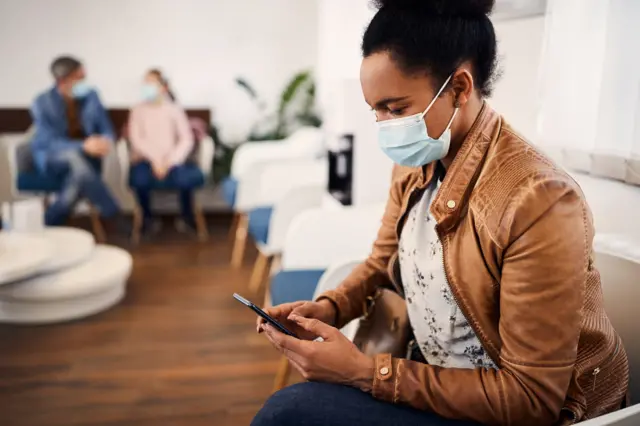
    A woman reads her phone and wears a face maskImage source, Getty Images

    Most Scottish health boards are now asking people to wear masks when they visit hospitals.

    It comes as the number of people admitted to hospital because of the flu has risen for the sixth week in a row.

    The rate has started to slow, but it is still adding pressure on the NHS Scotland at a busy time of year.

    People are being urged to get vaccinated to protect against severe illness, but some community pharmacies have run out of private flu jabs and are struggling to replenish stocks.

    Officials say there are still plenty of NHS supplies.

  4. Northern Ireland experiencing 'severe' flu outbreak - and children hit hardestpublished at 13:30 GMT

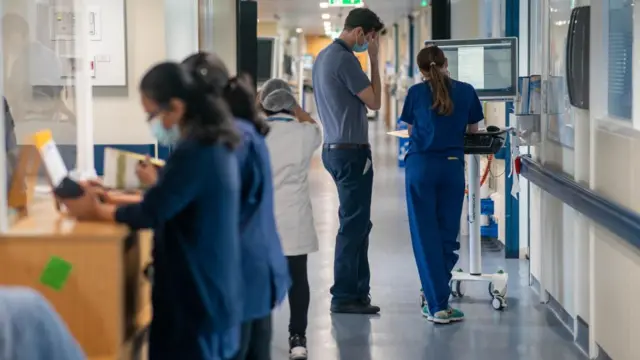
    Doctors and hospital staff stand in a busy corridor of a hospitalImage source, PA Media
    Image caption,

    There were more than 1,000 new flu cases in the first week of December in Northern Ireland

    Like other parts of the UK, flu cases have been rising quickly in Northern Ireland.

    Figures published today, external show there were 1,184 new cases in the first week of December - a 24% increase on the previous week.

    Children and young people have been particularly affected.

    A paediatric emergency medicine consultant previously told the BBC this winter was the "most severe influenza outbreak" she has experienced.

    Health trusts across Northern Ireland are asking people attending hospitals to wear masks due to the high levels of flu.

  5. Is Covid still around?published at 13:12 GMT

    Michelle Roberts
    Health editor, BBC News online

    Flu is not the only respiratory infection doing the rounds at the moment.

    People are still catching Covid and other viruses.

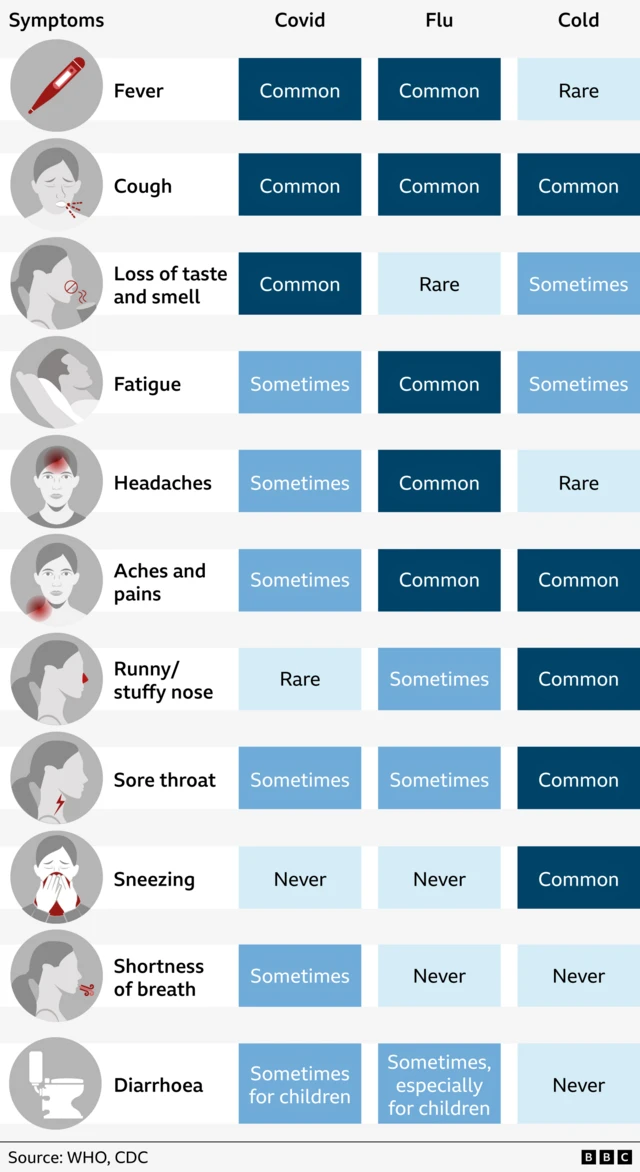
    If you have a cough and a high temperature it could be any of a number of infections. Your symptoms can give a clue.

    Flu is far worse than a cold and tends to come on quickly and make you feel very ill – you would struggle to get out of bed. Covid can feel a bit like flu, but you may have other symptoms such as loss of taste or smell and an upset stomach.

    Young babies and older adults may have caught an illness called RSV or respiratory syncytial virus which is very common at this time of year.

    All of the infections are spread by coughs and sneezes, so practising good hygiene – washing your hands frequently – can help stop the spread.

  6. Vaccine demand in Berkshire outpacing typical autumn peak, pharmacist sayspublished at 13:00 GMT

    Elliot Burrin
    Live reporter

    A man wearing glasses smiles in a pharmacy office.Image source, Olivier Picard

    Olivier Picard is a pharmacist who manages four branches in Berkshire. He tells me he's never seen a December with this high a demand for flu vaccines.

    He says demand usually peaks in October, so it's "very unusual" for him to buy more vaccines in December.

    This year he's even administered vaccines to people who've said they were turned away elsewhere due to there being no more vaccines ready.

    Picard says his branches were able to open extra appointments on the national booking system and take walk-ins, helping to lift the pressure elsewhere.

  7. NHS faces 'unprecedented wave' of flu as cases surge - a recappublished at 12:47 GMT

    Charlotte Hadfield
    Live reporter

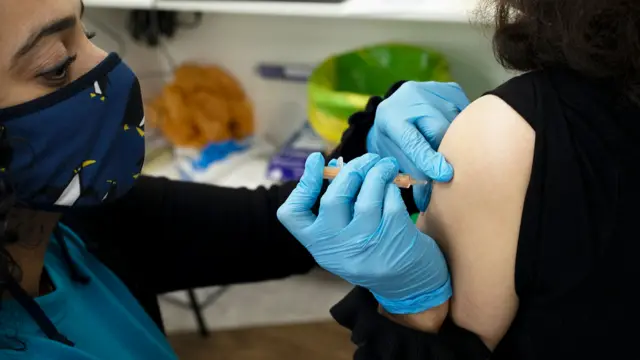
    A health professional wearing a blue face mask and blue surgical gloves gives a patient a flu vaccinationImage source, Getty images John Hand

    What's going on?

    The number of flu patients in hospital in England has reached record levels for this time of year in what NHS England describes as an "unprecedented situation”.

    • An average of 2,660 patients a day were in hospital with flu in England last week – an increase of 55% on the week before
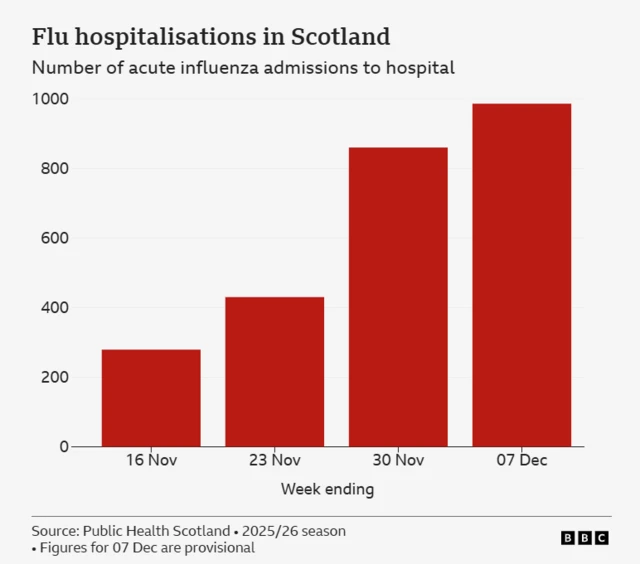
    • Last week, hospital admissions for flu in Scotland rose by 15% from 860 to 986
    • In Wales, 254 patients were in hospital with flu in the week up to December 7 - with 12 of those needing critical care

    What can you do?

    What does this mean?

  8. When should you go to hospital with flu?published at 12:28 GMT

    Michelle Roberts
    Health editor, BBC News online

    Most people who catch flu make a full recovery after a week or two with some rest at home.

    But some may need emergency care. People who are more vulnerable – such as those with existing chronic health problems – can develop serious and even potentially life-threatening complications, such as pneumonia.

    You should contact your doctor or call NHS 111 if you feel very unwell and you are worried.

    If you get sudden chest pain or difficulty breathing, seek urgent medical help. Do not drive to A&E. Ask someone to drive you or call 999 and ask for an ambulance. Bring any medicines you take with you.

  9. Starmer says guidance around masks not changingpublished at 12:17 GMT

    Media caption,

    Watch: Prime minister says winter plan in place for flu surge

    The prime minister has said the government is "not changing the guidance on face masks".

    As we mentioned in our previous post, the advice from UKHSA is that wearing a mask is something people with flu-like symptoms should "consider" when rates are rising.

    "We're not changing the guidance on face masks, but the usual things about ventilation, washing hands and just being careful when you're around people who are vulnerable – is the guidance," he tells reporters.

    "It's common sense and I think most people would want to behave in that way."

    More generally regarding flu, he says there is a winter plan in place. He also thanks NHS staff who "always step up" during the winter period.

  10. What is the advice on masks?published at 12:07 GMT

    Jim Reed
    Health reporter

    Woman wearing a face maskImage source, Getty

    All this talk of surging "super-flu" has revived the pandemic-era debate about mask wearing.

    A number of hospitals, from Bath to Bradford to Surrey, have been asking patients and visitors to wear surgical masks when they arrive in A&E or in certain departments.

    The longstanding advice from the UK Health Security Agency (UKHSA) is that wearing a mask is something people with flu-like symptoms should "consider" when rates are rising.

    But speaking to Times Radio this week, Daniel Elkeles, the boss of NHS Providers, which represents NHS trusts, went further saying that people with symptoms like aches and a fever "must" start wearing a face covering in public.

    "We were all very good about infection control during Covid and we really, really need to get back to that now," he said.

    UKHSA , externalsays that a mask can both protect the wearer from infection and, if used by someone with symptoms, can reduce the number of virus particles being released from the mouth and nose.

  11. Welsh flu surge 'significantly higher' than last winterpublished at 11:51 GMT

    Owain Clarke
    BBC Wales Health Correspondent

    The number of flu cases in Wales rose sharply during first week of December.

    There were a total of 254 patients in hospital with flu last week – with 12 of those needing critical care.

    Due to a lag between collecting the statistics and publishing them, the current rate of flu in Wales is likely to be higher and is significantly higher than the same point last year.

    Public Health Wales says it is "seeing significant numbers of cases of flu in all age groups, but currently especially in children and adolescents".

    But it says the flu vaccine this year is proving to be effective for younger people in offering protection against severe disease.

    Earlier this week Wales' chief medical officer reminded parents of children who had missed school vaccination sessions that it is not too late to arrange another before Christmas.

  12. No general flu jab shortage in local pharmacies, association sayspublished at 11:48 GMT

    There's still a "good availability" of flu vaccines in local pharmacies, according to the National Pharmacy Association.

    Head of Pharmacy Advice Jasmine Shah says member pharmacies have enough stock to vaccinate patients "promptly". The association represents over 6,000 pharmacies in the UK.

    There is no general shortage of flu jabs in local independent pharmacies, she says – but some primary care providers have temporarily run out of stock.

    "We urge people in at risk groups, such as older people and pregnant women, to get vaccinated as soon as possible," Shah says.

  13. Wards closed and visits restricted by Scottish health boardspublished at 11:46 GMT

    Katy Scott
    BBC Scotland news

    Public Health Scotland (PHS) says Scotland has now reached the high activity threshold for flu earlier than previous seasons.

    Last week's figures showed cases had more than doubled in the space of a week.

    Some Scottish health boards have had to close wards and restrict visiting, with many asking people to wear masks.

    Meanwhile a number of schools in Aberdeenshire have reduced their hours due to flu-related illness, with pupils taking online lessons at home.

    However PHS says its latest flu data shows that the vaccine was preventing severe flu, with children 78% less likely to be admitted to hospital if vaccinated.

    It says vaccinated adults in Scotland aged 65 and over were 37% less likely to be hospitalised.

    Dr Kim Marsh from PHS said: "Vaccination remains the best way to help protect yourself against serious illness from flu and is also important in reducing the spread of flu in the community."

    Graphic showing number of people hospitalised with flu hit nearly 1000 in December
  14. Analysis

    Data paints picture of NHS under pressurepublished at 11:33 GMT

    Jim Reed
    Health reporter

    The NHS in England is dealing with a 55% jump in flu patients needing hospital treatment in a week.

    That comes as other winter pressures start to build.

    Last week 32% of patients arriving in an ambulance had to wait at least half an hour to be handed over to hospital teams, up from 30% in the previous week.

    When they get to A&E, 74.2% of patients were seen within the target time of four hours in November, according to new figures this morning. That's up very slightly from the 74.1% in October.

    And the number of the sickest patients stuck in A&E departments for more than 12 hours before they can be admitted to a hospital ward, so-called "corridor care", stood at 50,648 in November, down from 54,314 in October.

    New data also shows the waiting list for pre-booked treatment such as non-emergency surgery had risen slightly to 7.4m by the end of October, up from 7.39m in September.

  15. Private vaccine stocks running low in Scotland, pharmacists saypublished at 11:31 GMT

    Katy Scott
    BBC Scotland news

    Pharmacies in Scotland have warned that private stocks of flu vaccines are running low.

    It comes as lab-confirmed cases in the country rose by a quarter from 1,875 to 2,331, according to the latest figures from Public Health Scotland (PHS), external.

    In the week of 1-7 December, hospital admissions for flu in Scotland increased by 15% from 860 to 986.

    Those eligible for a vaccine can access jabs from the NHS, but Community Pharmacy Scotland says that people have been paying for the vaccine at pharmacies for convenience.

    "It's a mixture," says policy and development head Adam Osprey.

    "Some people are saying to us that they are running low while others have completely run out and have not got much hope of getting the stock back in."

  16. What is super flu?published at 11:13 GMT

    Michelle Roberts
    Health editor, BBC News online

    Flu has come early this winter, and it looks to be a particularly nasty season because of a new mutated version of the virus which is circulating, say experts.

    People have not encountered much of it in recent years, which means there is less built up immunity against it in the community.

    For these reasons, many are now calling it "super flu", but it is not more severe or harder to treat.

    It is actually a type of seasonal influenza A virus called H3N2 "subclade K". Vaccines should still work well to help protect people.

  17. Hospitals already struggling, as A&E visits hit record highpublished at 11:03 GMT

    The surge in flu cases comes at a time when hospitals are already struggling with capacity.

    New monthly figures show A&E attendances hit a record high of 2.35 million in November – more than 30,000 higher than a year ago.

    There were also 48,814 more ambulance incidents compared to November last year.

    Meanwhile, resident doctors are threatening to go on strike from 17-22 December – although this could be averted by a last-minute offer from the government.

    The BBC was recently given access to Leicester Royal Infirmary's acute unit to witness first-hand how it is coping with an early surge of winter bug cases.

    All of the beds were full by midday, staff were primed to turn rooms around as soon as patients left, and one patient described waiting 106 hours for a bed on a ward.

  18. Analysis

    Is this flu wave actually unprecedented?published at 10:54 GMT

    Nick Triggle
    Health correspondent

    NHS England says the number of patients with flu in hospital is the worst on record for this time of year, describing it as an unprecedented situation.

    It is, but that's because the data only goes back to 2021-22. In doing so, it misses several really difficult flu seasons during the 2010s.

    The 2014-15 and 2017-18 winters were particularly bad – more than 20,000 deaths from flu were recorded.

    Both were far worse than what we have seen over the past four years.

    So when the NHS talks about being in an unprecedented situation it is not taking into account what happened just a decade ago.

    Could this flu season match those? It is quite possible. The strain that is dominant this year –H3N2 – was the one behind the 2014-15 and 2017-18 spikes.

    But it is worth remembering what is being seen now is not something that has never happened before.

  19. Stay at home if you have symptoms - and wear a mask if you want, says influenza leadpublished at 10:45 GMT

    A woman with long red hair in a purple blue jacket, with a white blurred Zoom background behind her

    If you have symptoms – such as coughing and sneezing – there are a few steps you should take to prevent the spread, says Dr Suzanna McDonald, who is the national lead for the influenza programme at the UK Health Security Agency.

    "You can consider wearing a face mask," she says, but the "first thing you should do to limit the spread of infection is stay at home."

    "In particular, you need to avoid mixing with anyone who might be more vulnerable if they were to catch flu," she tells BBC Radio 4's Today programme.

    If you do need to leave home, McDonald advises sticking to outdoor spaces or ensuring places indoors are well ventilated – by opening windows for instance.

    Covering your coughs or sneezes with a tissue – and washing your hands after – are must-dos, she adds.

    McDonald also says if you're considering getting a flu jab, there are no national shortages of vaccine stock.

  20. Is it Covid, flu or a cold?published at 10:34 GMT

    All will make you feel run-down, but the symptoms for each differ slightly:

    A table shows which symptoms are common or rare for Covid, the flu or a cold