川普對華政策可能讓美國付出災難性代價
On China, Trump Is Rolling the Dice on America’s Future
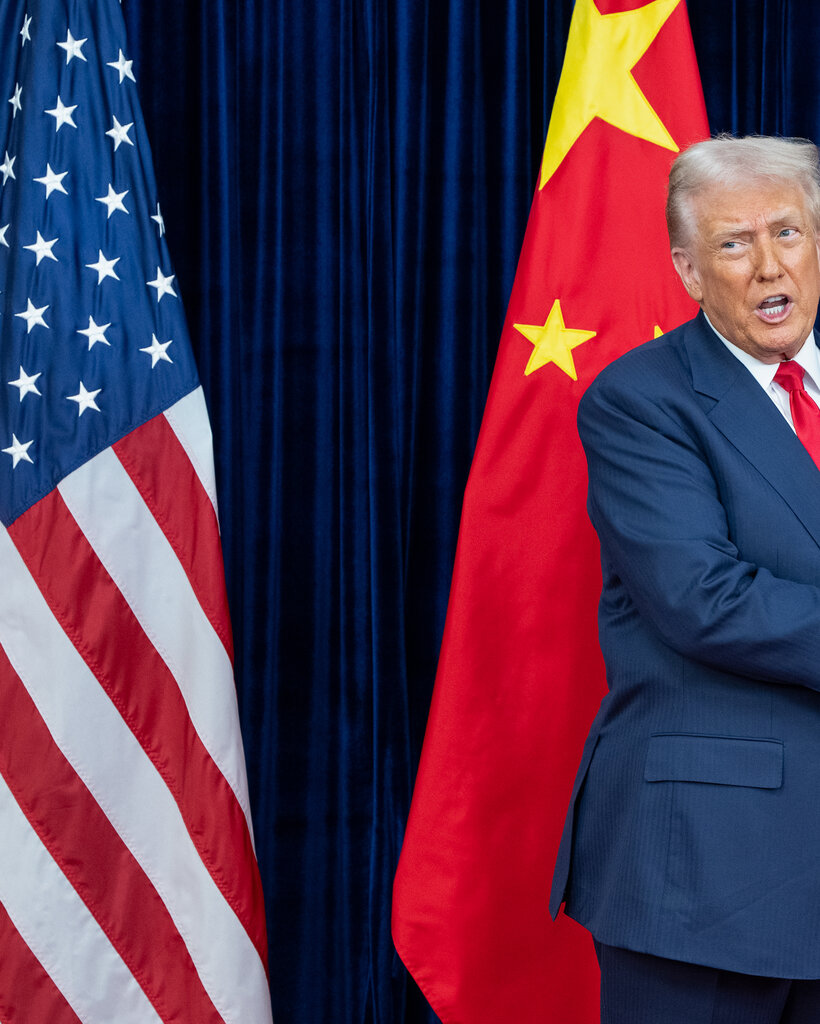
President Trump’s second-term approach to China is full of contradictions. One minute, he is threatening tariffs on Beijing and bolstering Taiwan’s military; the next, he’s lavishly praising Chinese President Xi Jinping and easing high-tech trade restrictions. His critics say this scattershot policy is incoherent. But in foreign affairs, inconsistency is not necessarily incompetence. Mr. Trump has used unpredictability to good effect in the past, including in relations with Beijing. The question is what he is after now.
川普總統第二個任期的對華政策充滿矛盾。一會兒,他威脅要對北京加徵關稅、強化台灣的軍事力量;下一刻,他又對中國國家主席習近平大加讚賞,並放鬆高科技貿易限制。批評者認為,這種霰彈式的政策缺乏連貫性。但在外交事務中,缺乏連貫性未必等同於無能。過去,川普曾有效地利用不可預測性,包括在處理中美關係時。現在的關鍵問題在於,他的真實意圖究竟是什麼。
Mr. Trump is unmistakably drawn to powerful autocrats. He admires — perhaps even envies — Mr. Xi’s brutal treatment of domestic foes and his repression of press opposition. Mr. Trump has reversed bipartisan restrictions on the flow of the most advanced semiconductor technology and artificial intelligence chips to China, undercutting one of the few areas of clear American advantage in the contest for global technological leadership. And he has resurrected, jarringly, the “G2” framing of the U.S.-China relationship, suggesting a shared approach to global trends and responsibilities.
川普顯然被強勢的專制統治者所吸引。他欣賞——或許甚至羨慕習近平對國內對手的強硬打壓,以及對媒體反對聲音的壓制。川普撤銷了此前兩黨共同支持的針對中國出口最先進半導體技術和人工智慧晶片的限制,削弱了美國在全球技術領導權競爭中為數不多的明確優勢之一。他還令人錯愕地重提美中「G2」關係框架,暗示兩國應在全球趨勢與責任上採取某種共同立場。
By contrast, in a challenge to Beijing, the Trump administration announced in December one of the largest U.S. arms sales to Taiwan in history, replete with items like precision munitions and drones that have proved effective in the brutal killing fields of the Ukraine war. And he has attempted to maneuver out from under the Sword of Damocles that China holds over the United States in the form of its monopolies of critical minerals and rare-earth magnets.
與此形成對比的是,為了向北京發起挑戰,川普政府在去年12月宣布了歷史上規模最大的美國對台軍售案之一,包括在烏克蘭戰爭殘酷戰場上證明有效的精確制導武器和無人機。與此同時,川普還試圖擺脫中國以關鍵礦產和稀土磁體壟斷對美國形成的達摩克利斯之劍。
The administration’s published documents and its senior figures’ statements provide little help in resolving these contradictions. Certain references to China appear to have been hastily edited out of Mr. Trump’s National Security Strategy. When administration figures do, on rare occasions, venture some version of a China strategy, they fall back on bromides like “Our policy is a policy of American power with America first at its core.”
政府發布的文件及其高級官員的表態並未能幫助外界釐清這些矛盾。川普的《國家安全戰略》中某些涉及中國的內容似乎被倉促刪減了。即便在極少數情況下,政府官員嘗試闡述某種對華戰略,也往往退回到諸如「我們的政策是以美國實力為基礎、以美國優先為核心的政策」這類空泛套話。
廣告
All of this ambiguity can cut one of two ways. It may help Mr. Trump to negotiate with Mr. Xi over long-term American interests when the two meet later this year. If Mr. Trump is just maneuvering for his short-term political and personal interests, however, the damage to the United States will be lasting. As the administration prepares for those meetings, it is crucial that it takes the first, strategic path. Even if it does, the approach carries risks.
這種模糊性可能產生兩種截然不同的結果:它或許有助於川普在今年晚些時候與習近平會面時,就美國的長期利益進行談判。但如果川普只是為短期的政治和個人利益而採取這些策略,那麼對美國造成的損害將是長期的。在政府為這些會面做準備時,採取第一種長期戰略性的路徑至關重要。即便如此,這種做法也伴隨著風險。
“Strategic ambiguity” has a tortured history in the U.S.-China relationship. It refers to the longstanding and intentional uncertainty over whether the United States would come to Taiwan’s aid militarily in the event of an attack by China on the island. This ambiguity has allowed Washington to balance engaging Beijing and preserving links with Taiwan, simultaneously warning both of them not to rock the boat.
「戰略模糊」在美中關係史上有著一段曲折的過去。它指的是長期以來,美國對於在中國攻擊台灣時是否會提供軍事援助採取一種故意模糊的態度。這種模糊性使華盛頓能夠平衡與北京的交往以及與台灣的聯繫,同時警告雙方不要破壞現狀。
The Trump team has taken strategic ambiguity to a profound new level. There is now a much larger uncertainty over whether, when the chips are down, the president will side with China’s authoritarians or align with America’s traditional opposition to adversaries seeking to dominate the Indo-Pacific. Strategic ambiguity in the Taiwan Strait context has been an imperfect but workable vehicle for deterring provocation and preserving peace and stability. There is anxiety now, however, that strategic ambiguity applied in the larger U.S.-China context might lead to accommodation, even appeasement, of an increasingly ambitious China.
川普團隊把戰略模糊推向了一個全新的高度。現在存在一種更大的不確定性:在關鍵時刻,總統是會站在中國的威權主義者一邊,還是會遵循美國的傳統立場,反對那些試圖主導印太地區的對手。在台海問題上,戰略模糊曾是一個雖不完美但行之有效的手段,用以威懾挑釁行為,並維護和平穩定。然而,現在的擔憂是,將戰略模糊運用於更宏觀的中美關係,可能會導致對一個愈發雄心勃勃的中國作出讓步,甚至綏靖。
Mr. Trump’s strategic ambiguity has certain advantages. First, it keeps China off balance about Washington’s ultimate intentions. Mr. Xi has managed Mr. Trump more effectively in his second term than in his first, treating the U.S. president personally with great respect while responding to every blunderbuss tariff threat with a precision countermove that exploits American vulnerabilities. Yet Beijing remains uncertain and worried about what Mr. Trump might do under duress. Mr. Xi is confident that the correlation of global forces favors Beijing in a longer-term contest with the U.S. but is still deeply wary of Mr. Trump’s ability to surprise and suddenly shift course in the near term.
川普的戰略模糊也有其優勢。首先,它讓中國難以判斷華盛頓的最終意圖。與川普的第一個任期相比,習近平應對二度執政的川普更加得心應手:在個人層面對美國總統表現出高度尊重,同時對每一次霰彈式的關稅威脅都以精準反制,直擊美國的脆弱點。儘管如此,北京仍對川普在壓力之下可能採取的行動感到不確定和擔憂。習近平相信,從長期來看,全球力量對比正朝著有利於北京的方向發展,但在短期內,他仍對川普出其不意、突然轉向的能力保持高度警惕。
Strategic ambiguity has certain domestic political advantages for Mr. Trump as well. China policy is one of the few areas where Republicans in Congress have found a tremulous voice to criticize the administration, reproaching its softer moves toward Beijing. Ambiguity keeps them hoping for a turn back to hard-line moves.
川普的戰略模糊在國內政治層面同樣具有一定優勢。在共和黨國會議員中,對華政策是少數幾個能讓他們鼓起勇氣批評政府的領域,他們指責政府對北京採取了過於溫和的舉措。模糊立場讓他們仍然抱有希望,期待政策能重新回到強硬路線。
The Trump administration’s big tent on China includes some top officials who are bent on securing commercial deals and others who believe that China poses an existential threat to America. The president’s strategic ambiguity accommodates these conflicting positions and agendas, albeit while triggering brutal bureaucratic infighting, by suggesting that it is merely a clever way to get to the ultimate destination of a hard, or a soft, relationship with China.
川普政府對華問題上的大帳篷之下,既有一心促成商業交易的高級官員,也有一些認為中國對美國構成生存威脅的官員。總統的戰略模糊為這些相互衝突的立場和議程提供了容納空間——儘管由此引發了激烈的官僚內鬥——因為它暗示這種策略僅僅是通往對華關係最終目標的一種聰明手段(無論這種關係是強硬還是軟化)。
廣告
For all of its advantages, however, ambiguity toward China carries more risks than rewards. U.S. strategy in the Indo-Pacific in the 21st century has rightly focused on building allied solidarity and military capacity through shared diplomatic approaches and combined technological prowess. Ambiguity doesn’t help that. The Trump administration’s harsh tariffs on America’s traditional partners may be manageable, but a true G2 world, dominated by the U.S. and China, would be untenable for America’s allies in the region.
然而,儘管有這些優勢,對華模糊政策帶來的風險仍遠大於回報。21世紀美國在印太地區的戰略本應致力於通過共同的外交手段和聯合技術實力來構建盟友間的團結及軍事能力。模糊性對此毫無助益。川普政府對美國傳統夥伴徵收嚴厲關稅或許尚可應對,但一個真正由美中主導的G2世界對該地區的美國盟友來說將是無法承受的。
Mr. Trump’s mixed messages already have partners from Tokyo to New Delhi scouring his utterances and actions for signs that Washington can still be counted on. Countries such as Japan and India want badly to be reassured and are seeking to sway Mr. Trump. Yet at some point, allies will make stark decisions about their security — including potentially pursuing nuclear weapons or alliances with other countries.
川普發出的自相矛盾的信息已經讓從東京到新德里的合作夥伴們不得不仔細審視他的言行,以尋找華盛頓是否仍舊可靠的跡象。日本和印度等國迫切希望得到保證,並正試圖影響川普。但在某種程度上,盟友們將不得不就自身安全做出艱難抉擇——包括可能追求擁有核武器,或與其他國家結盟。
At home, Mr. Trump’s ambiguity has helped to fracture the last true area of bipartisan consensus in American foreign policy: a tough, competitive framework for relations with China that has prevailed for the past decade. Now some corporate Republicans, largely from the investment world, along with liberal-minded academics and think-tankers, have defected in favor of a softer, more collaborative approach akin to the one that was dominant in the 1990s heyday of U.S.-China engagement.
在國內,川普的模糊性破壞了美國外交政策中最後一個真正的兩黨共識:過去十年中佔據主導地位的強硬、競爭性的對華關係框架。現在,一些主要來自投資界的親企業共和黨人,以及持自由派觀點的學者和智庫成員已經「叛變」,轉而支持一種更為溫和、更具合作性的方式,類似於20世紀90年代美中交往鼎盛時期的做法。
Whether Mr. Trump’s ambiguous approach is worth the risk ultimately depends on his goals. Those will become clearer this year. Mr. Trump and Mr. Xi are set to meet, potentially, on several occasions before year’s end, and administration advisers frequently refer to the prospect of a “comprehensive and ambitious” set of outcomes during the president’s expected visit to China in April.
川普的模糊策略是否值得冒險,最終取決於他的目標。今年,這些目標將逐漸清晰起來。川普與習近平有可能在年底前數次會晤,政府顧問也頻繁提及總統預計於4月訪華的行程中有望達成一套「全面而雄心勃勃」的成果。
The U.S. side has signaled that it badly wants short-term wins on exports of agricultural products and curbs on the flow of fentanyl, to address domestic political needs. China appears to be angling for bigger game, seeking access to advanced technologies while weakening Taiwan’s democratic leadership. Big U.S. concessions on Taiwan and technology in exchange for nominal Chinese purchases of legumes and restrictions on drug flows would be a manifestly bad deal. That could pave the way for Chinese hegemony in the western Pacific, with the U.S. ceding control over crucial global trade routes and leaving its allies vulnerable to coercion by, and eventually forced capitulation to, Beijing.
美國已經釋放信號,迫切希望在農產品出口以及遏制吩坦尼流入方面取得短期成果,以滿足國內政治需求。中國似乎在謀求更大的籌碼,尋求獲取先進技術,同時削弱台灣的民主領導層。若美國在台灣和技術問題上作出重大讓步,僅換取中方象徵性地購買豆類等農產品以及對毒品流出施加限制,那將無疑是一筆糟糕的交易。這可能為中國在西太平洋地區的霸權鋪平道路,使美國失去對全球關鍵貿易航線的控制,並讓盟友暴露在北京的脅迫之下,最終甚至被迫屈服。
It is not an exaggeration to say that the course of the 21st century may depend on whether Mr. Trump’s ambiguity is strategic or merely tactical. If Mr. Trump is playing a long game in hopes of improving America’s increasingly weak military and economic hand, then his ambiguity may well prove to be a cunning strategic gambit to keep the United States ahead of its primary global competitor. If he is instead just shoring up his political position at home while appeasing China, the costs for Americans now and in the coming decades could be catastrophic.
毫不誇張地說,21世紀的走向可能取決於川普的這種模糊究竟是戰略性的,還是僅僅戰術性的。如果川普是在玩長線博弈,試圖改善美國日益削弱的軍事和經濟籌碼,那麼這種模糊或許會被證明是一種精明的戰略布局,幫助美國繼續領先於其主要全球競爭對手。相反,如果他只是為了鞏固國內政治地位、對中國採取綏靖政策,那麼無論是當下還是未來數十年,美國人付出的代價都可能是災難性的。