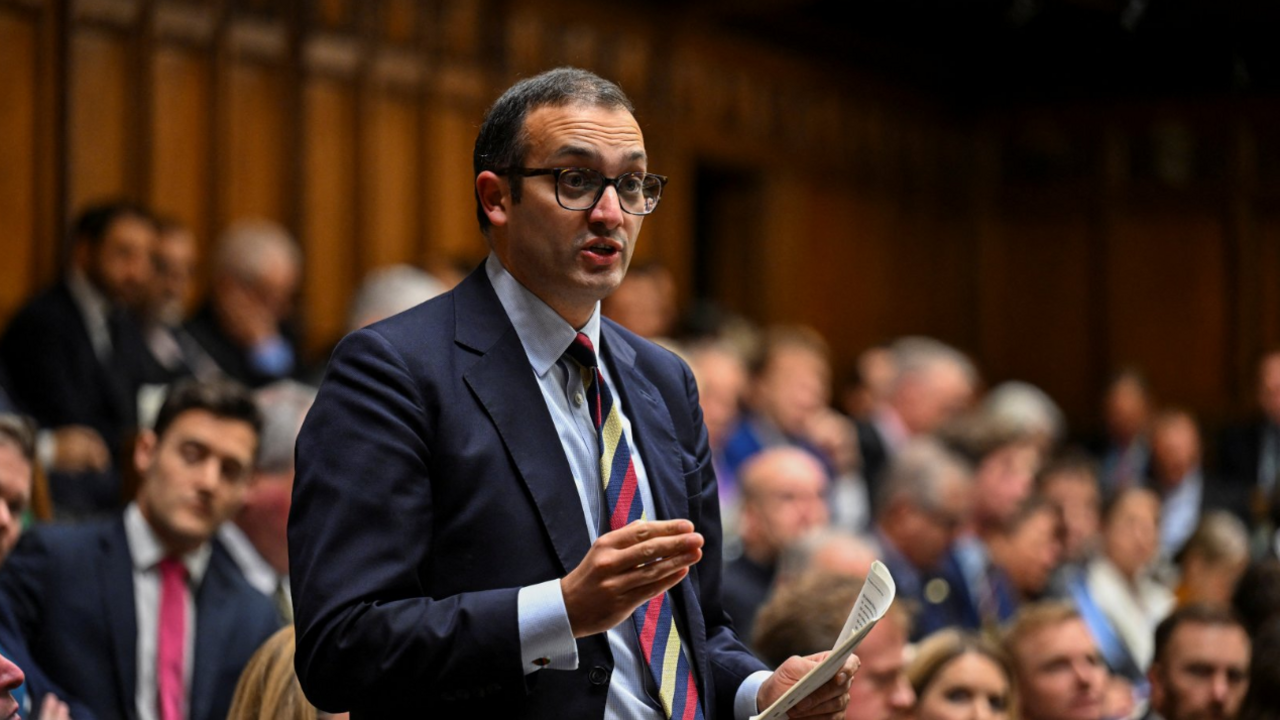
MP breached rules through APPG link to Israel

MP Neil Shastri-Hurst was found to have breached standards relating to rules governing all party parliamentary groups
- Published
An MP was found to be in breach of standards after a Parliamentary group's support organisation was found to have funding links to a firm owned by the Israeli government.
Neil Shastri-Hurst, Conservative MP for Solihull West and Shirley, was investigated in his capacity as chairman of the All Party Parliamentary Group on Defence Technology.
He referred himself to the Committee on Standards after he was told a funding partner of a secretariat to the group – RUK Advanced Systems Ltd – was a subsidiary of Israel-owned defence firm Rafael.
Shastri-Hurst, who resigned as the group's chair in June, has been approached by the BBC for comment. In a statement to the Committee on Standards, he "apologised unreservedly".
Under the rules for All Party Parliamentary Groups (APPGs), they must not accept the services of a secretariat – an organisation set up to support the group's activities – which is funded by a foreign government.
According to the Committee on Standards report, Shastri-Hurst "failed to ensure that adequate due diligence checks were made on RUK Advanced Systems Ltd".
It said this "enabled a foreign government, in this case the government of Israel, to act as an indirect, eventual funder of the secretariat".
'Mortified'
RUK signed up as a tier one partner in January, the report said, with a set payment of £1,499, allowing the firm access to the group's meetings, discussions and events.
The secretariat returned the payment to the company after the connection to the Israeli government was verified, the report added.
It said RUK confirmed the government of Israel had no involvement in the decision for the company to become a partner of the secretariat.
The APPG for Defence Technology was discontinued in August, two months after Shastri-Hurst resigned as its chairman.
The committee recommended that the MP apologise in writing to the House of Commons for breaching the rules.
The report said he had "admitted his failings", approached the inquiry with a "constructive nature" and sought to learn lessons from his mistakes.
In a mitigation statement published in the report, Shastri Hurst "apologised unreservedly", adding: "I am mortified that my action or inaction has resulted in this process, and would never intentionally act in any way to undermine the work or reputation of the House."
The committee said the breach came as a result of a misunderstanding of the rules "rather than a disregard for them" and also recommended the House seek advice from professional experts on due diligence.
Get in touch
Tell us which stories we should cover in Birmingham and the Black Country
Follow BBC Birmingham on BBC Sounds, Facebook, external, X, external and Instagram, external.
Related topics
- Published17 July