Council backs Center Parcs right to roam restriction by-law

A fenced area with one point of access is "central to the business model" of Center Parcs
- Published
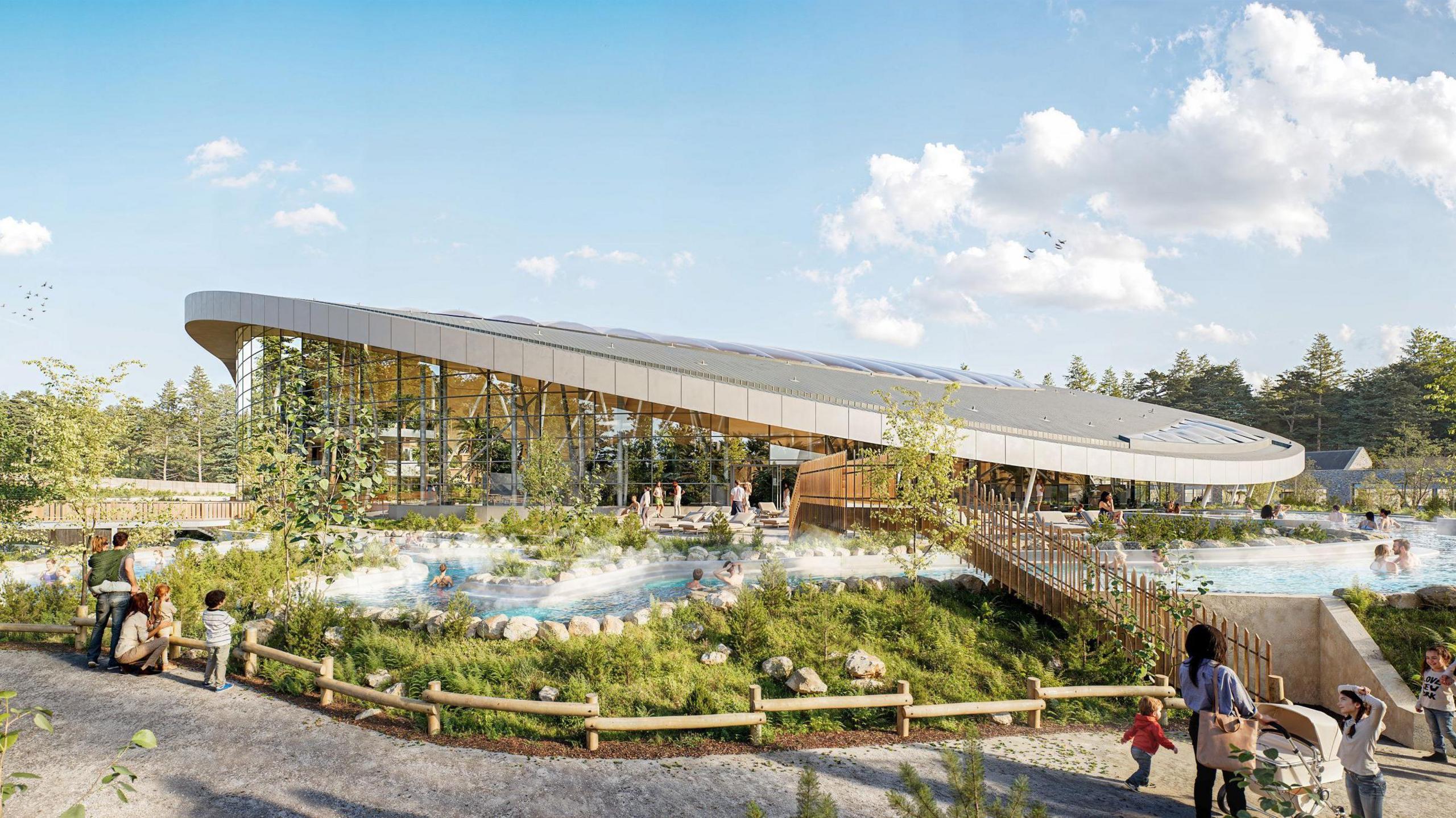
A council has agreed to seek confirmation of a by-law restricting the right to roam on the proposed site of Scotland's first Center Parcs.
A report to Scottish Borders Council (SBC) said the provision of a fenced area with one point of access on the land near Hawick was "central to the business model" used by the firm.
Opponents have raised concern about the precedent it could set and potential wider implications for other holiday parks or visitor attractions across Scotland.
However, SBC concluded that the only effective way forward was a by-law and agreed to ask Scottish ministers to confirm it.
Get in touch
Should access rights be restricted at Scotland's first Center Parcs?
The right to responsible access is set out in the The Land Reform (Scotland) Act 2003.
However, SBC has argued that its terms are not sufficient to meet the needs of Center Parcs which recently secured planning permission for its proposals.
The council said that its role of duty to uphold access rights did not prevent it from introducing a by-law restricting or even removing those rights.
It added that it had considered other options but concluded that the by-law - covering only the main site, not the wider parcel of land involved - was the "only appropriate approach to take".
The local authority said that while existing legislation would not allow access to the land immediately surrounding the lodges and other buildings on the site it would not control open areas and outside play and recreation areas.
"Broadly, it is imperative that Center Parcs know and is able to control who is on the main site at any given time for health and safety and security reasons," it said.
"It can only do this if access is limited to one point that passes an arrival lodge where security staff are based."
It said that would allow families to feel "safe and secure" while on holiday.
'Negative impact'
Ramblers Scotland said it believed there were grounds to object to the by-law but has suggested a range alternative measures which could be used.
It said it understood that a number of similar moves had been considered over the years but only one had been taken forward.
"Ramblers Scotland does not have an in-principle objection to changes in access in the main site as set out in the proposal," it said.
"However, in its current form, we believe that there are plausible grounds for objection which deserve the full scrutiny of Scottish ministers.
"In its current form there is a risk that, if approved as it is, then the proposed arrangements will be seen as a benchmark which other sites may seek to emulate with greater negative impact on outdoor access and recreational amenity."
It has set out further changes which could be made to the wider site which could enhance the net impact on access and result in a "win win win" scenario for Center Parcs, the council and people enjoying access.
'Strong concerns'
ScotWays - the Scottish Rights of Way and Access Society - raised an objection based on its concerns about precedent and the possibility of erosion of the rights of responsible access nationally.
"Scotways has strong concerns about the wider implications of the by-laws for similar caravan and holiday parks and other visitor attractions across Scotland," it said.
It said the move to restrict access was "contrary to the spirit and purpose" of the Land Reform Act and was "excessive in scope".
However, a special full meeting of SBC concluded the Center Parcs development was an "exceptional case" and the by-law should move forward to seek Scottish government approval.
The park will be the seventh Center Parcs village in the UK and Ireland but the first in Scotland and it is hoped it can open by 2029.
Related topics
- Published3 days ago
- Published30 August