Di three West African juntas wey US wan engage afta dem bin turn to Russia

Wia dis foto come from, Bloomberg/Malik Konate/Getty images
- Author, Paul Melly
- Role, Africa analyst
- Read am in 7 mins
Di US bin declare one stark policy shift towards three West African kontris wey dey battle wit Islamist insurgents.
Dia military govments bin don break dia defence ties wit France and turn towards Russia.
Di state department bin announce say Nick Checker, head of dia Bureau of African Affairs, go visit Mali capital Bamako to convey di United States' "respect for Mali sovereignty" and fine "new way" in relations, to move "past policy missteps".
E add say di US dey also look forward to co-operating wit Mali's allies, neighbouring Burkina Faso and Niger, "to share security and economic interests".
Wetin no dey for di agenda na di longstanding American concern for democracy and human rights.
Di Biden administration bin stop military co-operation afta coup wey remove di elected civilian presidents of all three kontris between 2020 and 2023. Niger president, Mohamed Bazoum still dey locked up for im own residence.
Di US statement make di radical change in policy clear, wey bin don dey show well-well over 12 months since Donald Trump return to di White House.
Di shift bin start wit di shutdown of USAID – one ogbonge provider of development support to di region – days after dem bin swear in di president for im new term.


End of Di one wey oda users dey read well well
Next tin wey follow na di repeated signals of small-small focus on security and mineral resources, as dem push both development and governance go corner.
Wia dis foto come from, AFP via Getty Images

Wia dis foto come from, AFP via Getty Images
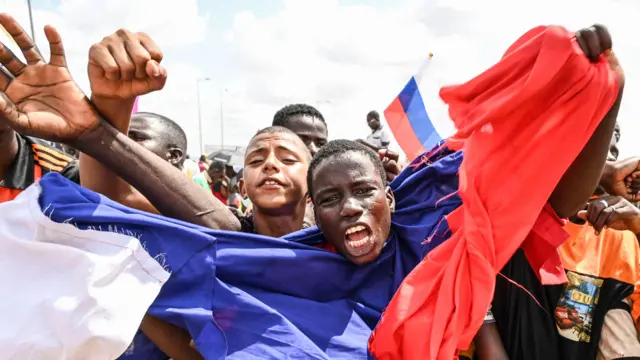
Di announcement of Checker visit go further to openly declare respect for Mali sovereignty. Di message go enta well for Bamako and allied capitals, wia military leaders don build dia appeal by striking pan-Africanist themes and reject former colonial power France.
Burkina Faso military leader, Capt Ibrahim Traoré, present himself as di standard-bearer to resist "imperialism" and "neo-colonialism".
Through serious social media promotion, im don gain huge support for dis stance and personal popularity among young pipo across di continent and beyond.
Di Trump administration don make am open say e no concern dem weda di regime reject di European-style constitutional model of elected civilian govment.
Massad Boulos, senior adviser for Africa for di state department and Trump confidant, last year bin tell French newspaper Le Monde: "Democracy dey always appreciated, but our policy no be to interfere for di internal affairs of oda kontris. Pipo dey free to choose any system wey go work for dem."
Dis attitude mark serious change.
During di Biden era Gen Michael Langley, head of di US military Africa Command (Africom) from 2022 to 2025, bin stress di importance of good governance and environmental issues, as complement to military support.
However last year, following di return of Trump return to di presidency, im tok say supporting di fight against terrorism na im main focus.
And na di main priority for West Africa, one message wey Rudolph Attala, senior counter-terrorism official, emphasize as im visit Bamako last year.
Den last month Africom deputy head, Gen John Brennan, bin confam say di US bin dey continue to actively support the three kontris wey military dey rule for dia struggle against jihadist groups, and Islamic State in particular.
E be like say di motives for Trump shift in approach na threefold.
Di US, like Europe, still dey seriously concerned about di long-term security threat wey di jihadist groups wey dey operate across di Sahel - di semi-arid stretch of land south of di Sahara Desert dey do. According to some definitions, di region now dey account for half of all di terrorism deaths for di world.
Although almost all di casualties na local, di US dey concerned say if di government lose much control of dia territory e fit allow di emergence of safe havens for jihadist groups to develop more and expand.
Diplomats and analyst evritime dey describe di region now as di "epicentre of global terrorism", wey fit present long-term international threat.
In di "tri-border region", wia Mali, Burkina and Niger meet, di West African offshoot of Islamic State (Islamic State for di Greater Sahara, ISGS) dey particularly active.
Na fresh reminder of di scale of threat wey e dey it bring, only last week one attack happun for di airport for Naimey, capital of Niger.

Wia dis foto come from, AFP via Getty Images
Di jihadist activity na also threat to di Sahel export of valuable or strategically important minerals: di region na major producer of gold and Mali dey also produce lithium – one important ingredient for rechargeable batteries and dem dey also use am for some medication – while Niger get significant uranium reserves.
Niger military govment don seize control of di kontri main uranium mine from di longstanding French operator, Orano, and dem dey lining up now for Russia as dia new partner for di sector.
E be like say di Trump administration dey concerned make dem no allow Russia to play di role of di only external defence partner of di three kontris.
Unlike di West African regional bloc Ecowas, France, di EU and di Biden administration, di White House of today no regard di Russian military presence as any threat to regional stability or human rights.
Russia bin don deploy about 1,000 security contractors to Mali, wit smaller contingents of mercenaries or regular troops for Burkina Faso and Niger.
Plenti allegations of abuses wey Russians, commit, in particular for Mali.
Wen Attalah bin visit Bamako, im bin signal say Washington bin dey quite relaxed about Moscow military involvement.
E look like say Washington no wan leave di field open for only Russian influence and now dem want to balance am with dia own security partnership.
Still, e go be on terms wey no go disturb Trump political base, wey im bin don repeatedly promise to end di involvement of US in "forever wars" overseas.
Dis no be about troops wey dey on ground – save, perhaps, for occasional training teams.
Africom Brennan say di US dey provide Mali, Burkina and Niger wit intelligence support and hints for di potential supply of weapons.
But Washington no dey seek to redeploy active forces or reopen di large drone base wey dem bin build for Agadez, Niger, wia dem bin get around 800 troops.
Di junta bin expel dem afta di Biden administration bin press for di roadmap to restore democracy.
Sake of how coups dey happun for Ecowas, dem bin try to pressure di military leaders to promise dem beta dates for new elections.
But in response Niger, Burkina and Mali withdraw from di bloc last year and now dem dey focused on building up dia own confederation, di Alliance of Sahel States (AES).
Becos dem no be members of Ecowas again and Ecowas no get responsibility to address dia internal governance values.
Dis don free di dozen of remaining member states to demsefs na to just try to rebuild practical co-operation wit di three kontris for di fight against Islamist groups.
Dis na major priority for govments across di region, at a time wen militants just dey cross borders anyhow to stage attacks or hide for di north of kontris like Benin, Nigeria and Togo, Ghana and Ivory Coast.
As di region dey face dis ogbonge challenge, US intelligence on key targets, and perhaps extra weapons too, fit help deliver some quick wins against di militants.
But - as France 10 years -long deployment of thousands of troops and air power to di Sahel bin show - high-tech military alone no go fit restore peace, unless dem go also address di complex social and economic stress wey dis desperately poor region of of di world dey face.