The Italian city where life is sweetest in winter

 Getty Images
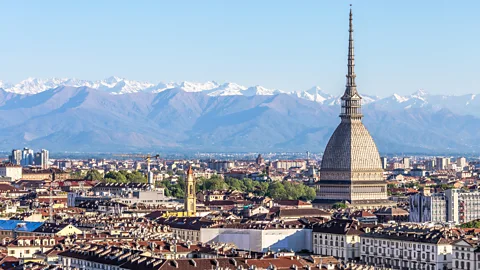
February is when much of Italy hibernates. But in Turin – an elegant ducal city at the foot of the Italian Alps – this frigid month is when the city comes alive.
I live just outside the city and at this time of year, my calendar quickly fills with seasonal celebrations and long winter meals rooted in centuries-old tradition. The events are non-stop: first, our Carnival spills out onto neighbourhood streets, with parades, costumed figures and market-day performances appearing across the city. Soon after, CioccolaTò arrives in Piazza Vittorio Veneto. Finally, vermouth takes centre stage in historic cafés, bars and cultural venues. Every frosty event is punctuated by cosy wintertime food and drink.
For travellers willing to rethink when to visit Italy, late winter in Turin is not a compromise season but the moment when everyday rituals are easiest to see.
Here are some of the best ways to savour a February getaway in Turin.
Early February: Carnival, markets and street parades
The first half of the month is the heart of Turin's Carnival season, with processions and lively neighbourhood celebrations playing out across the city between 1-15 February.
One of the first places to encounter Turin's Carnival culture is the Balôn antiques market in Piazza Borgo Dora, held at weekends. Here, rows of vintage furniture, prints and curios sit alongside Carnival masks; while historical reenactments range from ancient Roman legions to medieval and Savoy-era characters, including the Rusnenta, the traditional Carnival mask of Borgo Dora whose name – meaning "the rusted one" in local dialect – nods to the neighbourhood's long association with old objects and second-hand goods.
 Getty Images
I usually arrive in late morning once the market has found its rhythm and visit the nearby bakeries to stock up on Carnival pastries – like the traditional thin, crisp bugie dusted with icing sugar – to snack on while drifting between stalls and pausing at impromptu performances from brass bands and majorettes.
For a more playful, family-oriented take on Carnival, head to Parco della Pellerina, home to Italy's largest Carnival funfair. During this period, Turin's traditional Carnival performers appear across the city, with Gianduja – Piedmont's sharp-witted everyman in a tricorn hat – and his companion Giacometta greeting passersby and posing for photographs. The celebrations reach their peak on 15 February on the River Po, when masked performers board a Venetian gondola and other boats, gliding toward the Murazzi riverfront for a closing ceremony.
Mid-February: Turin's chocolate festival
As Carnival's closing procession unfolds, Turin's sweetest event is already in full swing. CioccolaTò, Turin's annual chocolate festival, turns the vast riverside Piazza Vittorio Veneto into a cocoa-scented hub, with stalls and tastings in the square spilling into historic palaces and cultural sites for workshops, guided tours and film screenings. Piedmontese producers dominate, but chocolatiers from across Italy – and a smaller selection from abroad – also take part, making it an efficient way to sample styles.
 Alamy
AlamyLong regarded as Italy's chocolate capital, the city's chocolate tradition dates to the 17th Century and lives on through its historic chocolatiers and cafes. Visitors can also board the Choco Tram, a vintage tram ride that links the city centre with Choco-Story Torino, an interactive museum tracing cocoa's global journey and Turin's role in shaping gianduja, the city's signature hazelnut-chocolate paste.
Turin's iconic chocolate
Gianduja emerged in the early 19th Century when local chocolatiers stretched scarce cocoa with finely ground hazelnuts. Its solid form, the giandujotto, was first distributed to the public during Carnival, its distinctive shape resembling Gianduja's tricorn hat. Today, nearly every café and pasticceria produces its own version, alongside house specialities such as Pfatisch's iconic chocolate-and-meringue cake, Il Festivo, that many Torinesi associate with celebrations.
Visitors can also board the Choco Tram, a vintage tram ride that links the city centre with Choco-Story Torino, an interactive museum tracing cocoa's global journey and Turin's role in shaping gianduja, the city's signature hazelnut-chocolate paste.
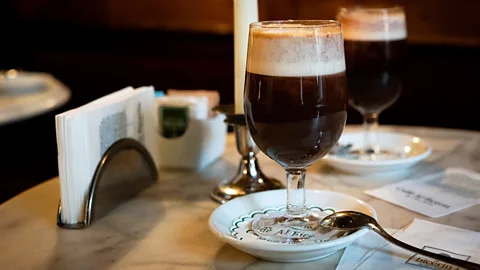
For a classic winter warm-up, order una tazza di bicerin (a layered blend of espresso, hot chocolate and cream) at Caffè Al Bicerin, a historic café facing the Santuario della Consolata where the drink originated in the 18th Century and is still prepared to the original recipe. "In winter, people crave something rich, warm and indulgent, and there's nothing more comforting than sharing creamy hot chocolate or zabaglione with loved ones," says chocolatier Grazia Carelli, who has welcomed guests here for more than three decades. "It fills the spirit, the heart and the body." You can usually find a table outside; you may have to queue for the cosy interior, but it's worth the wait.
 Zsofia Safar
Late February: Vermouth rituals and wine tasting
As the month progresses, Turin turns to its other defining treat. Vermouth – first codified here in the late 18th Century – sits at the heart of the city's aperitivo culture.
"Today, Turinese people are rediscovering vermouth neat, with ice and a twist of lemon or orange peel, to let the nuances of each artisanal label emerge," says Laura Carello, founder and curator of the Salone del Vermouth, the city's annual festival dedicated to the aromatic fortified wine, which celebrates its 240th anniversary this year.
Unlike elsewhere in Italy, she explains, "the aperitif here is not a rushed interlude, but a slower, more deliberate part of the day". Food, she adds, is meant to enhance the drink, not replace dinner – an inheritance of the merenda sinoira, the late-afternoon rural meal that the Savoyard capital gradually refined into a social ritual.
In the week leading up to the two-day Salone del Vermouth at the Museo Nazionale del Risorgimento Italiano, the festival expands into a citywide Fuori Salone – a series of tastings, talks, masterclasses and special cocktail menus hosted across Turin's bars, restaurants and museums. The wider schedule also includes visits to places closely tied to vermouth history, such as the Museo Carpano inside Eataly Lingotto and Casa Martini, where guided tours trace the drink's production before ending with a tasting.
Wine-lovers will enjoy Salone del Vino, a major regional wine fair that brings together hundreds of Piedmontese producers. For first-time visitors, it offers a compact introduction to the region's wines – from Barolo and Barbaresco to lesser-known alpine varieties – without leaving the city.
What Turin eats in February
Hearty and deeply traditional, Turin's cuisine is at its best in the cold months. Whenever I walk into a trattoria in February, I'm greeted by the unmistakable scent of slowly simmered meat, garlic, wine and cinnamon. At La Piola Sabauda, a traditional Piedmontese osteria in central Turin, chef and owner Roberto Forno says winter cooking in Piedmont is defined by "intense, evocative aromas – food meant to wake up a dormant appetite and warm you from the inside".
 Getty Images
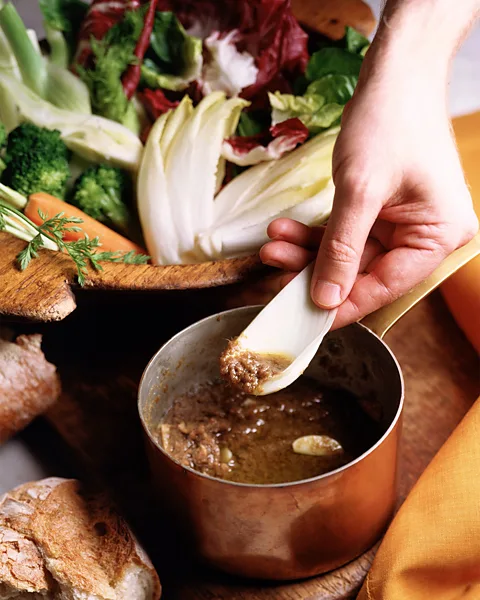
Few dishes capture that spirit better than bagna cauda, the steaming garlic-and-anchovy sauce served in a single pot, into which diners dip raw and lightly cooked seasonal vegetables. "Bagna cauda brings everyone back to the hearth," Forno says. "It's about being together." I usually warn first-timers that it's best enjoyed when they don't have pressing social engagements the next day.
More like this:
• Italy's strangest art town is getting a second chance
Winter menus also lean heavily on fonduta (a rich melted-cheese dish, served on its own or spooned over pasta, vegetables or eggs) and fritto misto (a mixed platter of lightly battered, fried meats, vegetables and sometimes fruit); while meat-lovers will find comfort in gran bollito misto (a procession of slow-simmered cuts served with green sauces) and veal brasato al Barolo, slowly braised in what locals call "the king of wines, the wine of kings". Meals often end with bunet, a dense chocolate-and-amaretto pudding that feels entirely in keeping with the season.
A day trip to Ivrea: The Battle of the Oranges
For those keen to punctuate Turin's winter rituals with something louder, Ivrea offers a striking contrast. Around an hour by train, the town's historic Carnival builds through processions and ceremonies before erupting in the Battle of the Oranges, its best-known tradition.
 Zsofia Safar
Held over three days from Carnival Sunday to Shrove Tuesday, the battle pits teams of aranceri (orange throwers) on foot against rivals riding in carts in a symbolic reenactment of a medieval revolt. I've watched from behind the safety nets and from inside the squares, close to the throwers and carts. It is loud, chaotic and strangely exhilarating.
Locals share a few rules for first-time visitors: dress warmly, keep a cup of vin brûlé (Piedmont's mulled wine) close at hand, and wear the red berretto frigio – the Phrygian cap that signals neutrality – unless you're ready to join the fray.
--
If you liked this story, sign up for The Essential List newsletter – a handpicked selection of features, videos and can't-miss news, delivered to your inbox twice a week.
For more Travel stories from the BBC, follow us on Facebook and Instagram.