The 20 best places to travel in 2026

 Alamy
AlamyFrom a Polynesian island ringed by blue lagoons to the heart of Chile's wine country, these are BBC journalists' top destinations this year.
We love Dubrovnik – but so does everyone else. Yet, many visitors to Croatia may not know that nearby Montenegro is also home to beautiful seaside settlements, plus new hiking trails that connect mountain communities. Across the water from always-trendy Buenos Aires, Montevideo offers similar world-class tango, steaks and architecture, and is one of South America's greenest cities. And while Rome may be eternal, Algeria's got the ancient ruins without the crowds.
In this year's guide to the best places to travel, we're highlighting destinations that offer incredible experiences while using tourism to support local communities, protect the environment and preserve their unique cultural heritage. To compile our list, we tapped BBC staff, our trusted journalists and some of the world's leading sustainable travel authorities to identify places that are enthusiastically welcoming visitors – and where your trip can have a positive impact.
Keep reading: your next great adventure awaits.
 Getty Images
Abu Dhabi
Why go: A blockbuster year of cultural openings – plus new theme park excitement
A sense of anticipation is hanging in the desert air. After years of development, the city's Saadiyat Cultural District – a project first signalled by the opening of Louvre Abu Dhabi in 2017 – is finally entering its defining phase.
The world's largest digital art museum, TeamLab Phenomena, recently opened, followed by the landmark Zayed National Museum, where visitors can see what the collated dreams of the nation looked like before it struck rich with oil. Pearl diving wasn't invented in the Emirates, but it has a huge story to tell, as does the influence of Islam, the spread of Arabic and the vision of the country's founding father: the late Sheikh Zayed bin Sultan Al Nahyan.
Equally new amid the museum scrum is Natural History Museum Abu Dhabi, which rises above the Arabian Gulf as a succession of giant sugar cubes and is inspired by the region's geology. And then there's the much-talked-about, much-delayed, largest-ever Guggenheim Abu Dhabi. Expect the cavernous modern art gallery in late 2026 or even beyond that. (Just don't mention the projected US$1bn/£751m cost.)
Beyond culture, Abu Dhabi is doubling down on theme park tourism. Yas Island's vast entertainment zone is expanding, with Warner Bros. World Abu Dhabi adding a Harry Potter extension and Yas Waterworld building an additional mega-zone of slides and rides. Plans are also progressing for the Middle East's first Disneyland, set to break ground on Yas in the coming years. It's all an ambitious experiment that's a long way from the yards and sand forts that once defined the city. – Mike MacEacheran
 Getty Images
Algeria
Why go: Roman ruins, rolling dunes and cultural preservation
Home to grand Roman ruins, surreal desertscapes and historic cities with a mesmerising mash-up of architectural styles, Algeria's rich tourism draws have long been kept at arm's length by the nation's famously complicated visa system. But the "sleeping beauty" of African tourism is finally waking up.
Algeria has been putting in the legwork to reach its goal of boosting international visitor numbers to 12 million per year by 2030. Recent developments include the introduction of a visa-on-arrival policy for travellers on organised tours, the launch of new airline Air Algérie subsidiary Domestic Airlines in August 2025, and a government commitment to step up the protection and preservation of its cultural heritage, including training and support for the nation's 460,000 handicrafts artisans.
New tours launched by a number of major operators are also making it easier to visit in 2026. Most visitors begin in the seaside capital of Algiers, a former Phoenician outpost layered with the influences of its successive rulers. Preserving the relics of three millennia of occupation, Unesco World Heritage-listed Constantine is another urban highlight. Nearby are the sprawling, well-preserved Roman ruins at Timgad as well as those of Djémila, both with zero crowds to contend with. And the rolling dunes of the Algerian Sahara stretch for hundreds of miles beyond, with the oasis city of Djanet serving as a hub for desert exploration. – Sarah Reid
 Montes Wines
Colchagua Valley, Chile
Why go: Wine, cowboys and stargazing
Two hours south of Santiago, Chile's Colchagua Valley stretches from the snow-dusted Andes along the Argentine border to the Pacific, following the corridor carved by the Tinguiririca River. While many travellers merely touch down in Santiago en route to Patagonia or the Atacama, heading south from the capital on a multi-day road trip reveals historic haciendas, scenic hikes and the heartland of Chile's skyrocketing international wine scene.
Long before Vik – the nearby luxury vineyard-hotel in Cachapoal – was named the best winery in the world for 2025, established Colchagua estates like Viu Manent, Los Vascos, Casa Silva and MontGras were drawing visitors for leisurely tastings. The Colchagua's culinary culture takes centre stage at places like Fuegos de Apalta, Francis Mallmann's airy, sunny temple to fire-roasted dishes in the midst of the Montes Winery's vineyards.
Travellers can sleep among the vines, too. Clos Apalta, the esteemed Lapostolle winemaking family's architecturally striking property, features 10 modern villas that protrude from a mountainside and seem to float over heritage Carménère, Cabernet and Syrah vine-covered slopes.
Wine aside, there's plenty to see and do in Chile's cowboy heartland, from rodeos to stargazing (including at the Cerro Chaman Observatory). Villages such as Santa Cruz and Lolol are home to lively markets and Spanish colonial-era adobe manor houses.
This year marks the 30th anniversary of Chile's original Wine Route, a circuit that still showcases the region's world-class food, wine and a culture that invites visitors to kick back, soak up the sun and stay a little longer. – Alexandra Marvar
 Getty Images
Cook Islands
Why go: New access to a paradisiacal Polynesian nation
Cook Islanders like to be visited – they're the extroverts of the South Pacific, after all. Yet, compared to other destinations in Oceania like Fiji, tourist numbers are low so you feel like you're a welcome visitor in their world, not a tourist in a resort.
Rarotonga, the largest and most populous island, is just 67 sq km, but everything great about the South Pacific is packed into it: triangular peaks reminiscent of Tahiti, a wild hinterland ringed by a blue-water lagoon and a proud Polynesian culture. Beyond Rarotonga – aside from honeymoon favourite Aitutaki – are 13 islands you can experience almost entirely for yourselves.
A new wave of barefoot luxury stays is transforming the islands and 2026 will see a major step up in cultural and environmental preservation. Custodians of Marae Moana – one of the world's largest marine parks – are strengthening protections for its most significant sites. In Aitutaki, three motu (islets) in its pristine triangular lagoon now have special status. The government has also delayed deep-sea mining research until at least 2032. On land, Rarotonga's sacred Maungaroa Valley – currently on Unesco's Tentative List – teems with rivers and tropical rainforests that have never been developed.
And it's never been easier to reach the Pacific's most perfect little paradise. Hawaiian Airlines upgraded its Honolulu-Rarotonga route in June 2025 with more convenient daytime departures and new US connections via Alaska Airlines. Jetstar will launch the first direct Brisbane-Rarotonga flights in May 2026. – Craig Tansley
 Alamy
AlamyCosta Rica
Why go: One of the planet's richest biodiversity hotspots is on the cusp of big change
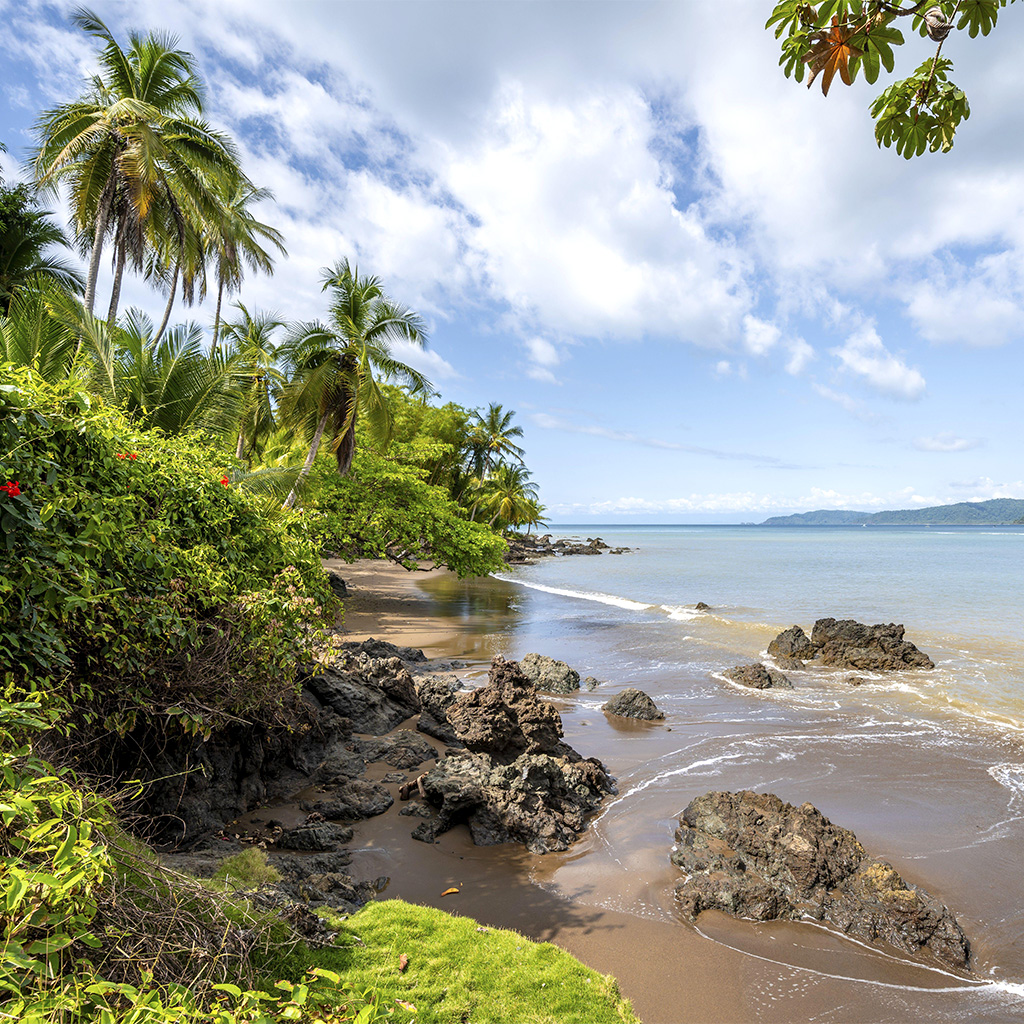
Costa Rica goes greener
"With its white-sand beaches, misty volcanic peaks, tropical rainforests and rich pre-Colombian and colonial history, Costa Rica offers travelers a range of attractions. As the first tropical country to reverse deforestation, the country boasts nearly 60% of forest cover and a quarter of its territory legally protected. The National Decarbonization Plan aims for carbon neutrality by 2050."
– Jeff Greenwald, Ethical Traveler
Travellers who make it to this pint-sized Central American nation will find a rare convergence of wilderness and wellness. Rainforest spills onto empty beaches, macaws wheel over turquoise coves and the Pacific pounds a coastline that holds 2.5% of the world's known terrestrial species within a single peninsula. You'll wake to the sound of howler monkeys, paddle through mangrove estuaries alive with bioluminescence or ride world-class breaks and practice guided breath work, meditation or yoga before hiking into the depths of Corcovado National Park.
Direct flights from capital San José to nearby Puerto Jiménez make this remote corner easier to reach, just as conservation milestones are gathering pace. In 2026, local NGOs and national partners plan to expand protected areas on both land and sea – strengthening jaguar corridors in the rainforest and boosting protections for migratory sharks offshore. Community-run surf schools, holistic retreats and eco-lodges are leaning into this moment, offering a blend of adventure, wellness and regenerative travel. Sustainability-forward Lamangata Surf Resort powers itself with solar energy and recycles wastewater, while Blue Osa Yoga Retreat runs a Save the Sea Turtles programme in partnership with nonprofit Osa Conservation.
The Osa Peninsula invites travellers to slow down and connect with the ocean’s elemental pull while helping protect it. In a world of overtourism, this wild coast proves that luxury and sustainability can share the same wave. – Pier Nirandara
 Alamy
AlamyHebrides, Scotland
Why go: A whisky boom, ancient stone circles, white-sand beaches and community warmth
Scattered along Scotland's wild Atlantic coast, the Hebridean islands have long lured travellers with their heart-quickening sacred sites, castaway beaches and tight-knit communities. And this year, many have much more to brag about.
At the northern tip of the Outer Hebrides, Lewis is unveiling a long-awaited visitor centre for the Calanais Standing Stones, the mystical cruciform-shaped stone circle that predates Stonehenge. For the first time, Historic Environment Scotland will also introduce a visitor fee, helping safeguard 5,000 years of Neolithic history.
Far to the south, landing at Barra Airport's unusual tidal beach runway still feels like stepping back in time. The island of chalky bays and medieval Kisimul Castle is gaining its first whisky distillery, putting the tiny village of Borve on the global spirits map. Whisky is already in the DNA of Islay in the Southern Hebrides, and demand for heavily peated single-malt Scotch continues to reshape the island. In whisky terms, it's the last square on the Monopoly board – and 2026 will see the arrival of two new distilleries, taking the island's total to 14.
First up is Laggan Bay Distillery from the brains behind other established Scottish spirit brands, including Rosebank, Glengoyne and Edinburgh Gin. Later in the year, visitors will be able to explore Portintruan Distillery, located outside Port Ellen where French luxury empire LVMH have opened the island's first immersive, whisky-themed hotel, Ardbeg House.
There's a sense that the whole island has been created as a perfect, almost smug, example of heartwarming Scottish hospitality. Tempted to visit? Book ahead for Fèis Ìle, Islay's annual whisky festival, in May. – Mike MacEacheran
 Hirotaka Ozawa
Ishikawa, Japan
Why go: Traditional crafts and award-winning sake
On New Year's Day 2024, a 7.6-magnitude earthquake devastated Japan's remote Noto peninsula in Ishikawa Prefecture. Two years on, local leaders are urging visitors to return to help support the area's renewal.
In the prefecture's south, the city of Kanazawa is just a bullet train ride from Tokyo and is home to Kenrokuen, one of Japan's most famous gardens, as well as a thriving world of traditional crafts. Travellers can step inside gold-leaf workshops and try their hand at making their own silk-dyed Kaga Yuzen pieces. But it's further north, in quake-hit Noto, where visitors can make the greatest difference. Here, "farmhouse inns" invite guests to join seasonal activities like rice planting, with proceeds helping to sustain families and the centuries-old terraced rice paddies of Shiroyone Senmaida.
The Noto peninsula is renowned across Japan for its seafood, centuries-old Wajima-nuri lacquerware and award-winning sake crafted by legendary Noto toji (master brewers). Many local breweries are once again operational, thanks to efforts like the Don't Stop the Noto Sake project, which funnels revenue back to earthquake-damaged breweries.
Visitors who stay in family-run inns, eat at reopened local restaurants or buy traditional crafts from local artisans are helping to keep Ishikawa's unique traditions alive at a moment when they are most at risk. It's a chance to stand with communities rebuilding their homes and cultural heritage, ensuring this storied region thrives for generations to come. – Mizuki Uchiyama
 Getty Images
Komodo Islands, Indonesia
Why go: Prehistoric wildlife, delicate reefs and habitat preservation
Rising from the turquoise Flores Sea, the Komodo Islands remain one of the planet's great wildlife theatres. Within this Unesco World Heritage-listed national park, pink-sand beaches meet savannah hills, coral gardens teem with manta rays and the world's last wild population of Komodo dragons roams freely.
In 2026, Indonesia will mark the park's 45th anniversary with new conservation programmes and visitor-management measures designed to protect both dragons and delicate reefs. Improved access – direct flights from Singapore and Kuala Lumpur to the gateway town of Labuan Bajo – makes it easier than ever to reach, while strict permits and ranger-led treks ensure tourism revenue supports local communities and habitat preservation. Travellers can explore by day-boat, stay in eco-lodges on nearby islands or sail between remote bays on traditional phinisi vessels for a deeper connection to the archipelago.
For those seeking adventure with purpose, Komodo offers a rare balance: close encounters with prehistoric wildlife, thriving marine biodiversity and a national park using tourism to safeguard its extraordinary ecosystem. – Pier Nirandara
 Diane Selkirk
Loreto, Baja California Sur, Mexico
Why go: Wildlife-rich waters, desert islands and conservation-led adventure
As the 30th anniversary of Loreto Bay National Park approaches, its conservation story continues to deepen. The park protects more than 200,000 hectares of the Gulf of California – home to blue whales, sea turtles and colonies of California sea lions – and remains one of Mexico's most influential grassroots-lead environmental wins
Now, the region is expanding its protected areas. Two new national parks – Nopoló and Loreto II – are under careful development, opening up thousands of hectares of desert canyons and mangroves and wildlife corridors for travellers to explore.
But Loreto's appeal reaches beyond its landscapes. Here, conservation is woven into daily life. Former fishermen, now trained naturalist guides, lead kayak trips through desert islets and whale-watching outings that double as citizen-science experiences. Visitors can help identify migrating blue whales, join coastal clean-ups, or take part in annual conservation festivals that fill the plaza with music, food and storytelling. For community connection, local groups and cooperatives host guided desert walks and communal suppers where travellers share just-caught seafood with families and artisans.
With its historic mission, whitewashed streets and the Sierra de la Giganta mountain range rising behind it, Loreto feels both small-town intimate and majestically expansive – a place where visitors can join a hopeful story of ecosystems recovering and communities leading the way. – Diane Selkirk
 Shafik Meghji
Montenegro
Why go: The dazzling Bay of Kotor and unspoilt wilderness
One of the world's youngest sovereign states, Montenegro celebrates its 20th birthday in 2026. With a population of fewer than 650,000 people and a patchwork of Illyrian, Roman, Ottoman and Yugoslav influences, this fledgling Balkan nation has become primarily known for its coastline – particularly the glorious fjord-like Bay of Kotor with its well-preserved Venetian outposts and walled old towns. Its Adriatic resorts are increasingly popular with travellers looking beyond the crowded, trending coastlines of neighbouring Croatia.
Yet, few visitors explore the nation's interior, where riverine plains give way to karst cliffs and forbidding peaks. Highlights include the pint-sized former royal capital of Cetinje, where a cluster of monasteries, palaces and museums provide a glimpse into the country's history, and the biodiversity hotspot of Lake Skadar, one of the most important bird reserves in Europe, with some 281 species.
But Montenegro's dramatic mountains are the real draw. The Prokletije range is one of the continent's few surviving wildernesses, a realm of jagged peaks, dense forests and glacial lakes home to wolves and bears. It is also veined with hiking routes, including a section of the Peaks of the Balkans, a 192km hiking trail that also passes through Albania and Kosovo and aims to use sustainable tourism to stop the abandonment of remote mountain communities and generate income for their residents. – Shafik Meghji
 Getty Images
Oregon Coast, US
Why go: Fresh ways to explore one of the US's most dramatic coastlines
Stretching nearly 370 miles from the dramatic cliffs of the Columbia River Gorge in the north to the towering redwood forests in the south, the Oregon Coast is a mesmerising mix of brawn and beauty. Wave-pounded shorelines splash against dense evergreen forests, lonely lighthouses poke their heads over the moody fog and migrating whales breach offshore from small-town fishing communities. And thanks to a 1967 landmark bill, Oregon is the only state in the nation whose entire coastline is free and public to everyone.
Though less visited than California's coast, the white-sand beaches and brooding headlands along this stretch of US-101 are one of the country's bucket-list road trips. But according to Kaitlyn Brajcich from Sustainable Travel International, those without their own wheels and EV owners will find more ways to experience the area in 2026.
"A seasonal shuttle now links Portland with coastal destinations, and a growing EV-charging network makes plug-in road trips more seamless. For those who prefer to pedal, bikes are available in many towns, or you can take on the 370-mile border-to-border [coastal cycling] route," Brajcich said.
Brajcich adds that freshly caught seafood now stays closer to home thanks to a new effort to keep Oregon's catch local, which supports communities that have long relied on these waters. Mobi-Mats laid over the sand and free beach wheelchairs enable more visitors to enjoy the shore, as does a new partnership with Wheel the World that maps inclusive lodging and experiences. And hotel stays booked through Every Stay Gives Back support the environmental nonprofits protecting this rugged, much-loved coast. – Eliot Stein
 Pelham Communications
Oulu, Finland
Why go: An Arctic city in full creative bloom for its 2026 Capital of Culture year
Located just below the Arctic Circle, Oulu is stepping into the spotlight in 2026 as one of Europe's Capitals of Culture – a milestone that promises to reshape how travellers see the quieter north of Finland. This accolade just adds to its growing list: the city already hosts the World Air Guitar Championships and is the self-declared winter-cycling capital of the world.
From January, the city and surrounding villages will host a year-long cultural programme that feels more like an evolving festival, with parties, pop-up performances, art installations and exhibitions. One highlight is the Arctic Food Lab, which brings Oulu's Nordic-Arctic flavours to the fore through tastings and special dinners showcasing ingredients shaped by the region's extreme soil and seasons. Another centrepiece is Climate Clock, a seven-piece public art trail created by leading Finnish and international artists in collaboration with scientists. Each installation reflects themes of creativity, climate change and our connection to "nature's time", echoing the city's broader effort to encourage slower, more mindful travel.
Beyond the cultural programme, there are windswept islands to explore, sunset walks beside lighthouses and – of course – the quintessential Finnish sauna culture. In 2026, the region's blend of frontier nature, Arctic heritage and cutting-edge creativity makes this low-key northern hub one of Europe's most intriguing destinations. – Laura Hall
 Getty Images
Philadelphia, US
Why go: The US's 250th celebration and a big year for sports
The United States was born in Philadelphia on 4 July 1776. In 2026, the city again takes centre stage as it celebrates the nation's 250th anniversary with a year-long programme of history, sport and art.
A major highlight is 52 Weeks of Firsts, a citywide series marking 250 years of Philadelphia's pioneering spirit. Each Saturday, a different neighbourhood hosts a "First-ival" celebrating a Philly innovation or landmark – from the invention of bifocals to the founding of Mother Bethel AME Church, the oldest parcel of land in continuous African American ownership. Talks, performances and on-site activations bring these milestones to life where they first occurred.
From February to September 2026, The Franklin Institute hosts the Universal Theme Parks exhibition, offering travellers behind-the-scenes insight into the engineering and design of one of the world's most popular theme parks.
Elsewhere, Mural Arts Philadelphia, the nation's largest public art organisation, will run more than 50 artist-led workshops as part of Printmaking by the People, where visitors can join free events and help inspire a new mural reflecting what democracy means today. Guided mural tours led by local artists directly fund community art programmes and education initiatives.
Sports fans should also take note: Philadelphia is hosting FIFA World Cup matches, the MLB All-Star Game, parts of the NCAA March Madness tournament and the PGA Championship. Add in RockyFest, marking 50 years since Rocky Balboa ran up the Philadelphia Museum of Art steps, and travellers will find a city brimming with history, creativity and pride. – Mizuki Uchiyama
 Nigel Young, Fosters and Partners
Phnom Penh, Cambodia
Why go: A new era for Cambodia's capital, with creative, sustainable openings reshaping the city
Mondulkiri's conservation tourism
"A six-hour bus trip from Phnom Penh, [find opportunities] to connect with nature. At Jahoo wildlife tours, local guides lead dawn treks to spot gibbons swinging overhead. The Elephant Valley Project is an ethical sanctuary where rescued animals roam freely, without rides or tricks." – Kaitlyn Brajcich, Sustainable Travel International
Phnom Penh is having a moment. Long overshadowed by Siem Reap, the capital is stepping confidently into 2026 with the launch of the new Techo International Airport, Cambodia's largest-ever infrastructure project. The futuristic terminal – bedecked with a giant silver Buddha – is expected to improve international access throughout 2026, with new routes from the UAE, Turkey, China and Japan, making the city easier to reach than ever.
On the ground, Phnom Penh is changing fast. The city that had just one traffic light 15 years ago is now a showcase for sustainable urban tourism, from its new Chaktomuk Walk Street – a pedestrianised riverfront street that turns into a weekend festival of Khmer street food, local crafts and live music – to the electric tuk-tuks owned by the newly opened Rosewood Phnom Pehn hotel that are being used to ferry guests around the city.
The city's welcoming feel is no accident, thanks to Cambodia's pioneering late architect, Vann Molyvann, who stated that no building could rise higher than the Royal Palace. His legacy is suddenly everywhere in 2026: Molyvann’s former 1960s home has reopened as a design-focused cafe and mini-museum inspiring the next generation of Cambodian architects, while other Modernist buildings are being restored by young creatives.
A new wave of Gen Z-led sustainable boutiques, distilleries and third-culture coffee shops reflects a growing homecoming movement among young Cambodians. Visitors can sip award-winning spirits made from local botanicals, taste Khmer dishes once banned during the war and wander leafy lanes lined with heritage shophouses. – Claire Turrell
Visiting Cambodia
In light of the Cambodia-Thailand conflict, the US State Department and UK Foreign Office have issued warnings to travellers looking to visit locations near the border. Phnom Penh and the country’s major destinations remain unaffected, but travellers should check current advisories before visiting.
 Getty Images
Guimarães, Portugal
Why go: The birthplace of Portugal – and Europe's Green Capital for 2026
Just 65km inland from Porto, Guimarães is astonishingly under the radar for a city considered the 12th-Century birthplace of Portugal and its first capital. Its beautifully preserved medieval core is a tangle of cobbled squares and lanes dotted with grand palaces and terraced restaurants, from Michelin-starred spots to laid-back eateries and craft beer bars. A short drive away, the nearby site of Citânia de Briteiros is a dramatic ancient hilltop settlement dating back to 9th Century BC.
But Guimarães is no museum piece. The city has a youthful, creative energy thanks to being one of Portugal's oldest university towns, with nearly half the population younger than 30. Contemporary culture sits comfortably alongside its medieval streets: futuristic galleries built for its 2012 European Capital of Culture title mingle with museums in ancient cloisters and hipster spots carved out of old factories.
In 2026, Guimarães celebrates both 25 years of Unesco World Heritage status and its new title as Europe’s Green Capital – recognition of two decades of sustainability work embedded across the city. Wander newly created green city oases and artfully repurposed heritage buildings or stroll along the banks of restored riverbanks, with a fleet of electric buses linking the projects together. It's a forward-thinking, quietly confident city – and one of Europe's most compelling surprises for 2026. – Norman Miller
 Alamy
AlamySamburu, Kenya
Why go: Crowd-free landscapes, rare wildlife and Kenya's newest astro-experiences
Beyond the bustle of Nairobi and the traffic jams of the Masai Mara lies Samburu County, a remote swathe of northern Kenya that has long prioritised its environmental and community-led conservation efforts. In 2026, the often-overlooked region is sharpening its focus on impact-driven adventure with a new astrotourism project, two conservation-driven camp openings – Basecamp Samburu and Soroi Samburu Lodge – and ongoing work on a climate change action plan that prioritises reforestation and renewable energy.
Travellers arriving at the semi-arid landscapes along the Ewaso Nyiro River will find an ever-increasing crop of conservancies and projects showcasing the traditions of the Samburu (Lokop) people. At Soroi Samburu Lodge, which will be fully open by mid-2026, guests can visit local projects and swap stories with Samburu members around the fire.
Wildlife conservation remains central across Samburu's nine conservancies, including the "Samburu Special Five", a collection of rare animals endemic to northern Kenya. Track black and white rhinos with Saruni Basecamp – both populations have grown in the last year – or help care for orphaned elephants at the community-owned Reteti Elephant Sanctuary and learn about conservation at its education-focused visitor centre.
Night-sky enthusiasts can explore the wonders of the cosmos with Samburu Sopa Lodge's astrotourism project, a first-of-its-kind endeavour that launched in September 2025. Listen to ancient star lore from Indigenous guides, join astrophysicists at Kenya's first astrotourism planetarium and sleep under the equatorial sky on Basecamp Samburu's designated star beds, with constellations visible from both hemispheres. – Alicia Erickson
 Getty Images
Santo Domingo, Dominican Republic
Why go: Experience the festive buzz of a city reborn
In 2026, Santo Domingo is ready to celebrate. Selected to host the 25th annual Central American and Caribbean Games from 24 July to 8 August, the oldest European city in the Americas is preparing for an influx of athletes from 37 countries to compete in the 100th anniversary of the competition.
The city has been busy preparing. In 2025, the 16th-Century Zona Colonial underwent a major renovation that included the restoration of 15 heritage facades and 11 cobblestone streets. The Juan Pablo Duarte Olympic Center has also been updated, with a tactile paving strip to guide visually impaired visitors as part of an effort to make both the Games and the city more inclusive.
Visitors should explore the city's nearby white-sand beaches and world class music scene. Santo Domingo is the beating heart of merengue and bachata culture, which provide a throbbing soundtrack to its February Carnival celebration and multi-day summertime Merengue Festival. The Isle of Light festival returns in March, and making a much-anticipated comeback after a 10-year hiatus is the city's Presidente Festival – one of Latin America's emblematic music events, showcasing major Dominican and Latin American talent.
New luxury inaugurations for 2026 include the Hyatt Place Santo Domingo Piantini (summer) and the recently opened Ocama, a villa-only hotel overlooking Rincón Bay in the verdant Samaná Peninsula. The Ocama now arranges helicopter charter transfers from Santo Domingo to the Samaná province, a former pirate haven whose coves, rainforests and turquoise waters were declared an Ecotourism Province in May 2025. – Eva Sandoval
 Diane Selkirk
The Slocan Valley, British Columbia, Canada
Why go: Walk a powerful new trail that honours a defining chapter in Canadian history
Set within a valley of clear lakes and deep forests and framed by the Purcell and Selkirk mountains, the Slocan region has long drawn travellers seeking raw, rugged beauty. In 2026, the Japanese Canadian Legacy Trail – a self-guided route honouring those forcibly uprooted and confined here during World War Two – will add deeper meaning to that landscape.
Between 1942 and 1946, more than 22,000 Japanese Canadians were displaced from coastal communities and sent inland to hastily built internment sites in farmers' fields and abandoned mining towns such as Sandon in the Slocan Valley. Despite the hardships – the loss of homes, livelihoods and community – the internees built schools, gardens, cultural spaces and support networks. Their children and grandchildren would later contribute profoundly to Canada's civic, artistic and academic life.
Accessible by car, bike or foot, the new 60km (37m) trail follows country roads and rail trails, linking museums, memorial gardens, a lakeside internment site and community-led exhibits developed with Japanese Canadian families. Between stops, travellers can pause at farm-to-table cafes, paddle the still waters of Slocan Lake, browse craft studios, take a dip in a hot spring or practise shinrin-yoku in old-growth forest.
The trail offers a reflective, place-based way to understand a dark and pivotal chapter in Canadian history at a moment when questions of belonging feel especially urgent. For valley communities, the new initiative honours the past while sustaining the region's future. – Diane Selkirk
 Michael Peters
Uluru, Australia
Why go: A landmark anniversary – and a new way to walk on ancient, sacred land
October 2025 marked 40 years since the historic Uluru Handback returned this sacred place to its Anangu Traditional Owners – a milestone that continues to reshape how Australia engages with Aboriginal sites. The nation has come a long way since visitors were once encouraged to climb what was then known as Ayers Rock, a practice formally banned in 2019. Today, Anangu are telling their stories on their own terms and travellers can connect with this ancient land in deeper, more meaningful ways.
The biggest moment of the year will be the launch of the Uluru-Kata Tjuta Signature Walk: a five-day, four-night journey linking the soaring domes of Kata Tjuta with the base of the world-famous red rock. The route traces 54km (33.5m) of Anangu-mapped trails through desert oak forest, spinifex plains and red-dune country normally closed to the public. It is also the only way travellers can sleep inside Uluru-Kata Tjuta National Park – a rare privilege made possible through a decade of collaboration with Traditional Owners – staying in beautifully crafted eco-camps and a new lodge that's been designed to melt into the desert palette. Already named one of the Great Walks of Australia, it blends sunrise hikes, stargazing decks and Indigenous-led workshops, with a share of revenue returning directly to community partners.
Beyond the trail, travellers can experience two extraordinary nightscapes: Wintjiri Wiru, the Anangu-led drone-and-light storytelling experience above the desert; and Field of Light, marking its 10th anniversary in 2026 as Bruce Munro's now-iconic installation of 50,000 glowing stems. – Ellie Cobb
 Getty Images
Uruguay
Why go: Flamingo-filled lagoons, world-class steaks and sustainability
Located between Brazil and Argentina, Uruguay is one of South America's smallest nations wedged between the continent's two largest. Yet despite its modest size, it offers a dazzling array of wildlife excursions, colonial architecture and windswept dunes – and has quietly become one of the region's most progressive destinations.
An inclusive destination
"IGLTA considers Uruguay one of the most progressive countries in the world. It is lauded as one of the safest places for [LGBTQ+] travellers to visit and live." – Jeff Greenwald, Ethical Traveler
The nation generates 98% of its electricity from renewable sources, it consistently ranks as one of the safest places for LGBTQ+ travellers and its Uruguayans by Nature campaign encourages visitors to respect the environment while supporting local communities.
More than half of Uruguay's roughly 3.5 million residents live in Montevideo, the vibrant capital that has the feel of a seaside resort despite remaining a busy port. Though long overshadowed by Buenos Aires just across the River Plate, Montevideo is also one of the birthplaces of tango, home to world-class steaks and hosts South America's longest carnival celebration (lasting at least 40 days) from January to March.
Beyond the capital, the Portuguese-founded city of Colonia del Sacramento is an architectural treasure trove, while the fertile grasslands of the pampas are scattered with cattle ranches producing some of the finest beef on the planet. Uruguay's coastline is peppered with glorious beaches, surf spots, party towns and quiet fishing villages – not to mention the flamingo-filled lagoons of Laguna de Rocha and Laguna Garzón and the rippling sand dunes of Cabo Polonio. – Shafik Meghji
--
If you liked this story, sign up for The Essential List newsletter – a handpicked selection of features, videos and can't-miss news, delivered to your inbox twice a week.
For more Travel stories from the BBC, follow us on Facebook and Instagram.